


Four-Day Skills Training
Designed for anyone with an interest in deepening their understanding of Open Dialogue and developing the basic skills needed to co-facilitate Open Dialogue network meetings.
The Four-Day Skills Training is appropriate for team members who want to support lead facilitators deliver network meetings. It is designed to engage services who want to work towards a whole-of-community response to mental health and wellbeing. This course can be a pathway towards becoming a fully trained Open Dialogue practitioner through our One-Year Foundation Course.
We encourage teams to train together, and to assist with this, the Four-Day Skills Training will now run concurrently with the first four days of the OYFC. This means services can train support facilitators and lead facilitators at the same time — building consistency and shared language across your team from day one.
For those who complete the Four-Day Skills Training only and later decide they want to qualify as a lead facilitator, the pathway is straightforward: they simply join the next available OYFC cohort, picking up from day five.
Designed for team members within any service or organization who want to support lead facilitators to deliver Open Dialogue network meetings. This course is for those who want to deepen their understanding of Open Dialogue with the potential to work towards becoming a fully trained facilitator through our One Year Foundation Course. It is also designed to engage services who want to work towards a whole-of-community response to mental health and wellbeing.
With the increasing interest in Open Dialogue, this program is offered online to ensure access from people and organisations around Australia.
Open Dialogue is a way of listening, of being present with a person and their network and of ensuring that everyone’s voice is heard.
It is recognised by the World Health Organisation as an approach that elevates the voice and agency of the individual and their rights – enabling compassionate, recovery-oriented care, involving family and community.
It is also featured and encouraged in the Victorian Royal Commission into Mental Health and is a way to deliver on many of the recommendations
Participants will learn about:
Learn how to become a support-facilitator in dialogical and relational practice within a network meeting through roleplays.
Deepen your understanding of the key elements of Open Dialogue practice, with real life examples and experiential learning sessions.
Expand your knowledge about the positive outcomes for people, families and their social network.
Support your team or organisation with the journey towards successful implementation of the Open Dialogue Approach.
Develop skills to assist with InterVision to support workplace welfare and self care.
Workshop real-life scenarios to understand how to put theory into practice.
This highly engaging program will explore the principles of Open Dialogue and the skills it can bring to life. This program will help you gain a deeper understanding of Open Dialogue, enabling you to start the process of integrating the key principles into your everyday practice. It will also enable you to explore how network meetings can become part of your work and practice.
This four-day introduction can serve as beneficial preparation for the One-Year Foundation Course.
Who should apply:
Anyone with an interest in learning more about Open Dialogue and especially those who work directly with people in need of support such as workers in community healthcare, lived and living experience workers, clinicians in the specialized mental health services, GPs, teachers, and others.
We hope you can join us.
Course details:
Facilitators:
Mark Hopfenbeck and Tilly Read
Date:
Day 1+2 – 24/25 September 2026
Day 3+4 – 19/20 October 2026
Time:
9.00am to 4.30pm (AEDT)
Cost:
$1100 + GST ($1210)
Location:
Virtual
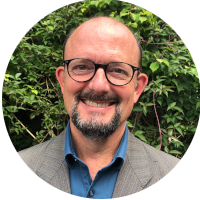
Mark Hopfenbeck is the Open Dialogue Centre Senior Trainer. Mark has extensive experience in training Open Dialogue across the globe. Mark has spent the past 20 years training mental health teams in Norway, England, Portugal, Israel, and Czechia.
Mark is currently lead trainer for the Post-graduate Certificate in Peer-supported Open Dialogue offered by North East London Foundation Trust and City St George’s, University of London. Mark is also Program Director for the Post-Graduate Certificate in Peer-supported Open Dialogue, Systemic Practice and Relationship Skills at City St George’s. Mark spends most of his time collaborating with Open Dialogue researchers and practitioners around the world – supporting the development and dissemination of the Open Dialogue Approach.
He is currently co-investigator involved in Open Dialogue: Development and Evaluation of a Social Network Intervention for Severe Mental Illness (ODDESSI) (2017-2025), and is a member of the Advisory Board for HOPEnDialogue: An International collaborative multicentre research network to support the Open Dialogue learning community and evaluate the effectiveness of Open Dialogue in various mental health care contexts around the world (2019-2027).
He is also Individual Project Partner at the Collaborating Centre for Values-based Practice in Health and Social Care, St Catherine’s College, University of Oxford and an Honorary Associate Professor in the Health Services Research and Management department at City St George’s, University of London. Mark is also Program Director for the Post-Graduate Certificate in Peer-supported Open Dialogue, Systemic Practice and Relationship Skills at City St George’s.
Mark is co-editor of The Practical Handbook of Hearing Voices (2021), The Practical Handbook of Eating Difficulties (2022) and The Practical Handbook of Living with Dementia (2022).

Tilly Read has extensive experience in Open Dialogue training. As a Community Practice Lead in the UK, Tilly has been instrumental in spearheading initiatives centred around Open Dialogue, including the ODDESSI Trial and Peer Supported Open Dialogue methodologies.
Tilly is from Devon in the UK and has been instrumental in designing training to support how teams plan, collaborate and foster culture change. She is a clinical practice lead who brings nearly a decade of experience as a registered mental health nurse. She develops ways to strengthen the understanding of how Open Dialogue can be transformative for organisations and the workforce, with deep knowledge around Peer Supported Open Dialogue, organisational clinical processes, better outcomes for people and families and guidance around developing truly person-centred approaches.
Tilly led the implementation of the ODDESSI trial in Devon. ODDESSI is a large randomised control trial in the UK, researching the effectiveness of Open Dialogue in crisis and continuing metal health care within the National Health Service in the UK.
Mark is currently lead trainer for the Post-graduate Certificate in Peer-supported Open Dialogue offered by North East London Foundation Trust and City St George’s, University of London. Mark spends most of his time collaborating with Open Dialogue researchers and practitioners around the world – supporting the development and dissemination of the Open Dialogue Approach. His core research interests have focused on integrating Open Dialogue with current models of recovery, collaborative care and peer support in order to facilitate the implementation of Open Dialogue within statutory mental health services as well as the development of organizational and clinical fidelity measures.
He is currently co-investigator involved in Open Dialogue: Development and Evaluation of a Social Network Intervention for Severe Mental Illness (ODDESSI) (2017-2025), and is the coordinator of the Advisory Board for HOPEnDialogue: An International collaborative multicentre research network to support the Open Dialogue learning community and evaluate the effectiveness of Open Dialogue in various mental health care contexts around the world (2019-2024).
He is also Individual Project Partner at the Collaborating Centre for Values-based Practice in Health and Social Care, St Catherine’s College, University of Oxford.
Mark is co-editor of The Practical Handbook of Hearing Voices (2021), The Practical Handbook of Eating Difficulties (2022) and The Practical Handbook of Living with Dementia (2022).
Scholarships
If you are a Lived and Living Experience Worker(LLEW), reside in Victoria and would like to apply for a course Scholarship, please click on the button below to check your eligibility and apply.
*Scholarships are limited.
**You must complete the registration below on the same day as the Scholarship application. Do not complete payment until you are advised if you Scholarship application was successful.
Please complete the form below and complete payment to register for this workshop.
Payment
For direct transfer Bank Details are:
BSB: 082-356
Account: 24 100 7959
Please include your NAME as the reference
If you require an invoice for payment please advise via email
training@opendialoguecentre.org.au
Please note your booking will not be finalised until payment is received.
For Credit Card payments please select the Stripe payment button below.