Could We Be Building the Next Mental Health Revolution?
Attending my first TheMHS Conference in Brisbane this September was an eye-opener—and a wake-up call.
The conference theme ‘Envisioning 2050’ had me thinking not just about where AI might take us, but about a more fundamental question: after decades of mental health reform, why are we still failing people and their families so spectacularly?
Here’s a sobering statistic: Australia’s mental health spending has skyrocketed from $135 per capita in 1995 to $427 per capita today (adjusted for inflation). That’s more than triple the investment and yet our nation’s mental health is no better in 30 years.
During the conference I was reminded about a small Italian city that dared to imagine something completely different.
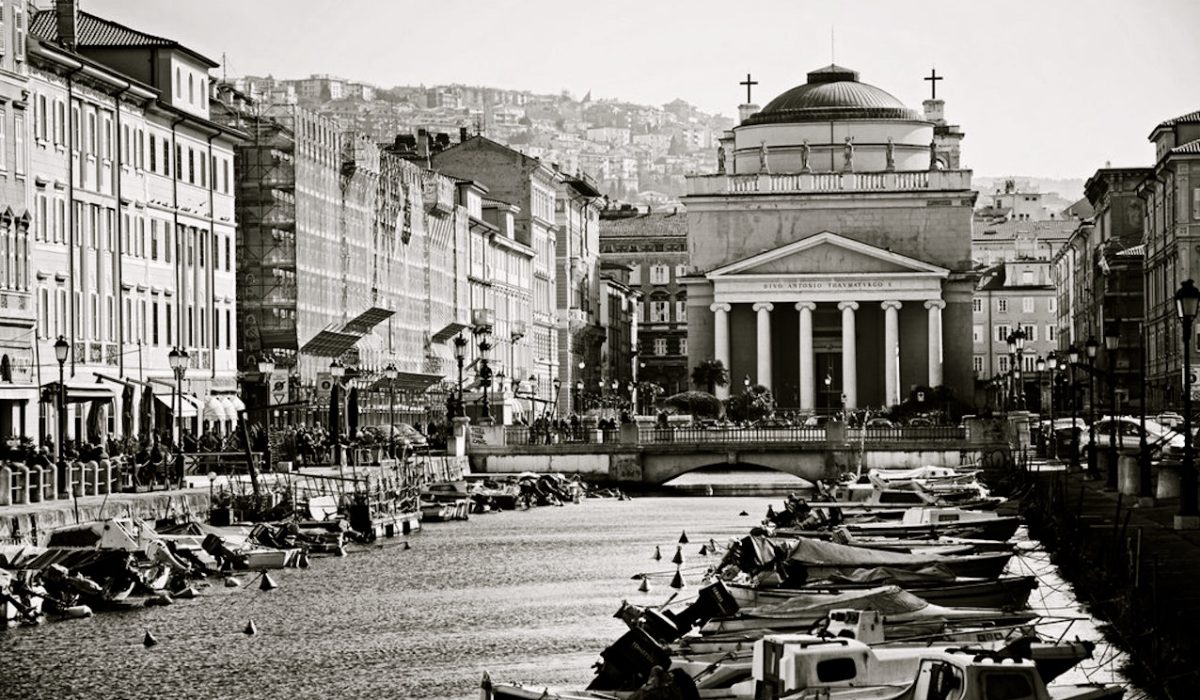
Trieste: When a whole community said "enough"
In 1971 in Trieste, a coastal city in northeast Italy with 200,000 residents—roughly the size of Hobart – Franco Basaglia became the director of the provincial psychiatric hospital and started a process of transformation with a group of young physicians, psychologists, volunteers and students. But what happened next wasn’t just another policy reform or hospital closure. It became a social revolution.
Basaglia had been revolted by what he observed as the conventional regime of institutional ‘care’ with locked doors when he first worked in Gorizia in the early 1960s. But by the time he reached Trieste, he understood something profound: you can’t fix a broken system by simply moving the broken pieces around.
Instead of just closing the asylum and opening new facilities, Basaglia created a community movement. The Trieste model put the person—not their diagnosis—at the centre of the health care system. Art, food and social activities became ways for the whole community to be involved in a person’s mental wellness.
The results speak for themselves: Trieste today has consistently lower suicide rates, less homelessness, fewer people with mental illness in prisons, and dramatically reduced use of compulsory treatment orders. Basaglia’s reforms ultimately led to a 1978 law that abolished all of Italy’s mental asylums, and the Trieste model has been emulated in several Italian regions and more than 40 countries. It is recognized by the World Health Organization as one of the most progressive community-based mental health care systems in the world.
Franco Basaglia
Basaglia died tragically young at 56 in 1980, but his legacy lives on. The implementation of the psychiatric reform law was completed in 1998, marking the end of Italy’s mental asylums.
Why Trieste succeeded
In the 1960s and 1970s, people who were considered mentally ill were kept in enormous asylums, often for the rest of their lives. And while in our current climate, things have evolved, simply moving services into the community isn’t enough if you don’t change how the community thinks about mental health.
Many countries, including Australia, still approach mental health with an institutional mindset. We’re obsessed with building “world-class facilities” and writing endless policy documents about community-based care. But sadly, many of the dehumanising things we found so horrible about asylums still exist in our current mental health services, just in different buildings.
Trieste succeeded because it wasn’t just about redesigning services. It was about fundamentally shifting how an entire community understood and responded to psychological distress.
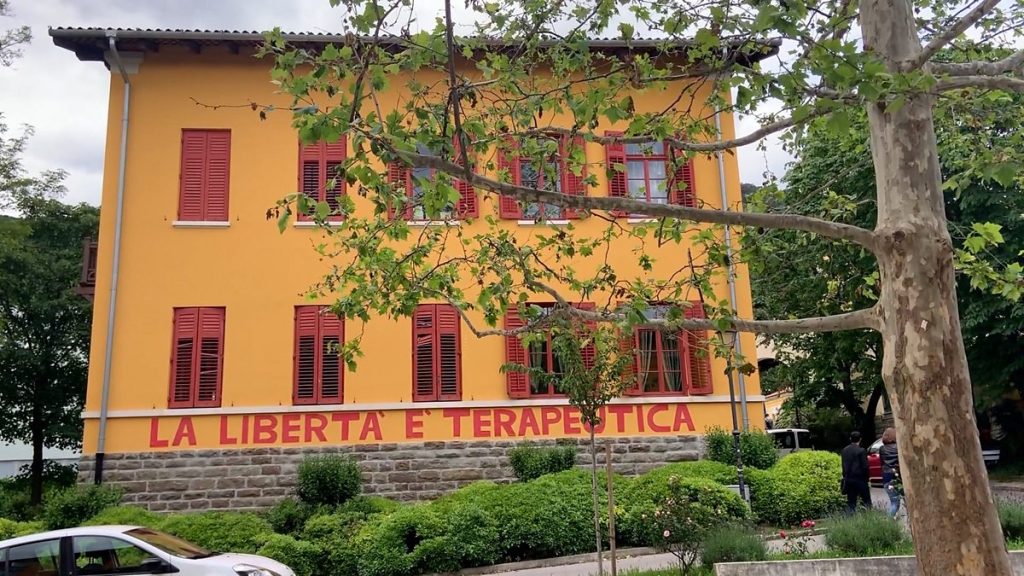
“La Libertà è Terapeutica” – Freedom is Therapeutic
The Goulburn Region in Victoria: Australia's next Trieste?
My own presentation at the conference described the Open Dialogue Approach and its potential to radically transform mental health service design. This is emerging now as a real possibility in the Goulburn Region of Victoria, where our community partners see the same possibility that Basaglia must have felt 50 years ago.
Open Dialogue isn’t just another treatment model—it’s a social movement that recognises mental health crises as fundamentally relational. Like Basaglia’s revolution, it requires everyone to participate: families, networks, services, entire communities can lean in to create a safe space for dialogue and connection.
Could Shepparton become Australia’s Trieste? Could we create something so transformative that in 2050, visitors will travel from around the world to understand what we built here?
I am sure Basaglia would have loved Open Dialogue. He would have recognised it immediately as the same type of revolutionary social movement he championed in Italy. Both approaches understand that real mental health transformation isn’t about better hospitals or smarter policies—it’s about services learning to work together to build relationships and community capability.