

One-Year Foundation Course
One-Year Foundation Course
Listen Reflect Connect Grow
Listen Reflect Connect Grow
An Invitation to the Open Dialogue One-Year Foundation Course - Sydney - 2025/26
Open Dialogue practice is a way of being in relation to others. It relies on authenticity and responsiveness in meeting with people who are at the centre of concern and their networks.
This course is facilitated by Lisa and Mark, who have each been deeply engaged with the development of dialogical practices in and around the social and mental health fields, here in Australia and internationally. A dialogical way of being, for the facilitators, is a way of meeting an individual’s life situation, the resources of the network and the complexity that is life.
This course is for you if are already in the process of developing Open Dialogue practice and want to further develop dialogical and network-oriented ways of being.
This course is also for you if are willing to explore yourself as a relational being and engage in self work to help you be with others in a collaborative, human way.
In this application form, you are invited to share with us your decision to apply for this course – what you hope for yourself, your practice, and your relationships.
With kindness,
Keith Bryant
Chair and Chief Executive, Open Dialogue Centre
One-Year Foundation Course in Open Dialogue
Becoming an Open Dialogue Practioner
Course dates:
Block One – 12 to 16 May 2025
Block Two – 11 to 15 August 2025
Block Three – 10 to 14 November 2025
Block Four – 2 to 6 February 2026
Location:
Macquarie Graduate School of Management (MGSM)
1 Executive Road, Macquarie Park, NSW, 2113
Cost:
$6050 ($5500 + GST)
Course dates:
Block One – 29 September to 3 October 2025
Block Two – 24 to 28 November 2025
Block Three – 16 to 20 February 2026
Block Four – 11-15 May 2026
Location:
The Hub at Docklands
80 Harbour Esplanade, Docklands VIC 3008
Cost:
$6050 ($5500 + GST)
One-Year Foundation Course in Open Dialogue (Virtual and in-person available)
Becoming an Open Dialogue Practitioner
Course dates:
Day 1+2 – 15 to 16February2027
Day 3+4 – 22 to 23 February 2027
Day 5+6+7 – 15 to 17 March 2027
Day 8+9+10 – 10 to 12 May 2027
Day 11+12+13 – 8 to 10 June 2027
Day 14+15+16 -26 to 28 July 2027
Day 17+18 – 16 to 17 August 2027
Day 19+20 – 23-24 August 2027
Location:
Virtual (with limited online)
Cost:
$7150 ($6500 + GST)
REGISTRATIONS ARE NOW CLOSED
Course dates:
Day 1+2 – 24 to 25 September 2026
Day 3+4 – 19 to 20 October 2026
Day 5+6+7 – 16 to 18 November 2026
Day 8+9+10 – 8 to 10 February 2027
Day 11+12+13 – 8 to 10 March 2027
Day 14+15+16 – 4 to 6 May 2027
Day 17+18 – 24 to 25 May 2027
Day 19+20 – 1 to 2 June 2027
Location:
Virtual (with limited online)
Cost:
$6050 ($5500 + GST)
Open Dialogue Centre is able to deliver the OYFC in person on demand for services looking to train teams of 20 or more together.
With changes to the way courses are structured, the first four days of the OYFC now run concurrently with the Four-Day Skills Training. This means services can train support facilitators and lead facilitators at the same time — building consistency and shared language across your team from day one.
For those who complete the Four-Day Skills Training and later decide they want to qualify as a lead facilitator, the pathway is straightforward: they simply join the next available OYFC cohort, picking up from day five.
Please contact us via training@opendialoguecentre.org.au to discuss.
Join us virtually (or in-person on demand) to deepen your practice and develop new skills through Open Dialogue.
ODC’s One-Year Foundation Course is the only course of its kind in Australia with facilitators who are developing the Open Dialogue Approach in different settings and contexts in Australia and internationally.
We are inviting mental health professionals and practitioners who work in multidisciplinary areas of health and wellbeing to be part of an approach that enables responsive and compassionate care for people and families.
Join us in Sydney, Melbourne or Brisbane to deepen your practice and develop new skills through Open Dialogue.
ODC’s One-Year Foundation Course is the only course of its kind in Australia with guest speakers who are developing the Open Dialogue Approach in different settings and contexts in Australia and internationally.
We are inviting mental health professionals and practitioners who work in multidisciplinary areas of health and wellbeing to be part of an approach that enables responsive and compassionate care for people and families.
Our Open Dialogue Faculty
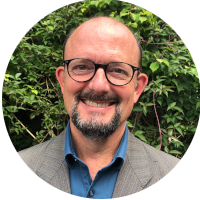
Mark Hopfenbeck, who is a highly regarded trainer in Open Dialogue having spent the past 20 years training mental health teams in Norway, England, Portugal, Israel, Czechia.
Mark is currently lead trainer for the Post-graduate Certificate in Peer-supported Open Dialogue offered by North East London Foundation Trust and City St George’s, University of London. Mark spends most of his time collaborating with Open Dialogue researchers and practitioners around the world – supporting the development and dissemination of the Open Dialogue Approach. His core research interests have focused on integrating Open Dialogue with current models of recovery, collaborative care and peer support in order to facilitate the implementation of Open Dialogue within statutory mental health services as well as the development of organizational and clinical fidelity measures.
He is currently co-investigator involved in Open Dialogue: Development and Evaluation of a Social Network Intervention for Severe Mental Illness (ODDESSI) (2017-2025), and is the coordinator of the Advisory Board for HOPEnDialogue: An International collaborative multicentre research network to support the Open Dialogue learning community and evaluate the effectiveness of Open Dialogue in various mental health care contexts around the world (2019-2024).
He is also Individual Project Partner at the Collaborating Centre for Values-based Practice in Health and Social Care, St Catherine’s College, University of Oxford.
Mark is co-editor of The Practical Handbook of Hearing Voices (2021), The Practical Handbook of Eating Difficulties (2022) and The Practical Handbook of Living with Dementia (2022).
Mark is currently lead trainer for the Post-graduate Certificate in Peer-supported Open Dialogue offered by North East London Foundation Trust and City St George’s, University of London. Mark spends most of his time collaborating with Open Dialogue researchers and practitioners around the world – supporting the development and dissemination of the Open Dialogue Approach. His core research interests have focused on integrating Open Dialogue with current models of recovery, collaborative care and peer support in order to facilitate the implementation of Open Dialogue within statutory mental health services as well as the development of organizational and clinical fidelity measures.
He is currently co-investigator involved in Open Dialogue: Development and Evaluation of a Social Network Intervention for Severe Mental Illness (ODDESSI) (2017-2025), and is the coordinator of the Advisory Board for HOPEnDialogue: An International collaborative multicentre research network to support the Open Dialogue learning community and evaluate the effectiveness of Open Dialogue in various mental health care contexts around the world (2019-2024).
He is also Individual Project Partner at the Collaborating Centre for Values-based Practice in Health and Social Care, St Catherine’s College, University of Oxford.
Mark is co-editor of The Practical Handbook of Hearing Voices (2021), The Practical Handbook of Eating Difficulties (2022) and The Practical Handbook of Living with Dementia (2022).

Tilly Read has extensive experience in Open Dialogue training. As a Community Practice Lead in the UK, Tilly has been instrumental in spearheading initiatives centred around Open Dialogue, including the ODDESSI Trial and Peer Supported Open Dialogue methodologies.
Tilly is from Devon in the UK.
Tilly has been instrumental in designing training to support how teams plan, collaborate and foster culture change. She is a clinical practice lead who brings nearly a decade of experience as a registered mental health nurse. She develops ways to strengthen the understanding of how Open Dialogue can be transformative for organisations and the workforce, with deep knowledge around Peer Supported Open Dialogue, organisational clinical processes, better outcomes for people and families and guidance around developing truly person-centred approaches.
Tilly led the implementation of the ODDESSI trial in Devon. ODDESSI is a large randomised control trial in the UK, researching the effectiveness of Open Dialogue in crisis and continuing metal health care within the National Health Service in the UK.
Mark is currently lead trainer for the Post-graduate Certificate in Peer-supported Open Dialogue offered by North East London Foundation Trust and City St George’s, University of London. Mark spends most of his time collaborating with Open Dialogue researchers and practitioners around the world – supporting the development and dissemination of the Open Dialogue Approach. His core research interests have focused on integrating Open Dialogue with current models of recovery, collaborative care and peer support in order to facilitate the implementation of Open Dialogue within statutory mental health services as well as the development of organizational and clinical fidelity measures.
He is currently co-investigator involved in Open Dialogue: Development and Evaluation of a Social Network Intervention for Severe Mental Illness (ODDESSI) (2017-2025), and is the coordinator of the Advisory Board for HOPEnDialogue: An International collaborative multicentre research network to support the Open Dialogue learning community and evaluate the effectiveness of Open Dialogue in various mental health care contexts around the world (2019-2024).
He is also Individual Project Partner at the Collaborating Centre for Values-based Practice in Health and Social Care, St Catherine’s College, University of Oxford.
Mark is co-editor of The Practical Handbook of Hearing Voices (2021), The Practical Handbook of Eating Difficulties (2022) and The Practical Handbook of Living with Dementia (2022).
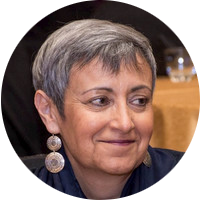
Yasmin Ishaq is a relational psychotherapist, social worker and Open Dialogue trainer and clinical supervisor who brings decades of experience working in the UK public sector in a way that is trauma-informed, family-inclusive and strengths-based.
Yasmin was the Open Dialogue lead for mental health services in Kent as part of the NHS in the UK until 2021. she also developed previous new initiative to start the Early Intervention in Psychosis Service in East Kent in 2005 and the primary care mental health social work service in 2015.
From 2016 – 2021, Yasmin led the first standalone NHS Open Dialogue service in the UK, and evidenced that the approach could be developed, sustained, and provide positive outcomes for individuals and families accessing specialist mental health services.
Her approach incorporated the principles of Open Dialogue in a way that elevated a non-judgmental emphasis around understanding individuals and families within a cultural, social, psychological and environmental context.
Working in various roles as a Practitioner and Manager across Youth and Adult services in the UK, Yasmin brings extensive experience in supporting clinical and non-clinical teams to adopt Open Dialogue. She has been part of the development and delivery of several years of Open Dialogue foundation courses, train the trainer courses, introductory courses and workshops for organisations (from formal services to small charities) looking to support their practice development and approach to delivering Open Dialogue.
Yasmin also speaks and teaches from a family lived experience perspective which has informed her practice, training and service development.
Mark is currently lead trainer for the Post-graduate Certificate in Peer-supported Open Dialogue offered by North East London Foundation Trust and City St George’s, University of London. Mark spends most of his time collaborating with Open Dialogue researchers and practitioners around the world – supporting the development and dissemination of the Open Dialogue Approach. His core research interests have focused on integrating Open Dialogue with current models of recovery, collaborative care and peer support in order to facilitate the implementation of Open Dialogue within statutory mental health services as well as the development of organizational and clinical fidelity measures.
He is currently co-investigator involved in Open Dialogue: Development and Evaluation of a Social Network Intervention for Severe Mental Illness (ODDESSI) (2017-2025), and is the coordinator of the Advisory Board for HOPEnDialogue: An International collaborative multicentre research network to support the Open Dialogue learning community and evaluate the effectiveness of Open Dialogue in various mental health care contexts around the world (2019-2024).
He is also Individual Project Partner at the Collaborating Centre for Values-based Practice in Health and Social Care, St Catherine’s College, University of Oxford.
Mark is co-editor of The Practical Handbook of Hearing Voices (2021), The Practical Handbook of Eating Difficulties (2022) and The Practical Handbook of Living with Dementia (2022).
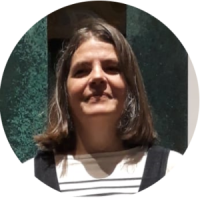
Tracy Lang is from Devon in the UK, and draws on her teaching background when developing and delivering Open Dialogue training. Tracy has been involved with both the ODDESSI trial and APOD study research sites.
Tracy has completed a Postgraduate Certificate in Peer‑Supported Open Dialogue, Social Network and Relationship Skills (POD). She brings lived experience as a family member to her work, helping to drive change in mental health services towards approaches that are compassionate and relational.
Drawing on her background in teaching, Tracy is involved in developing and delivering POD training within the Devon Partnership Trust . She has worked with both ODDESSI trial and APOD study research sites, supporting the practical application of Open Dialogue principles across training and service contexts.
Tracy is a co founder of ODISC, which is a collaboration between healthcare practitioners from the NHS involved in the ODDESSI trial, researchers based in the UK, and health, social care and education practitioners who are interested in the potential of Open Dialogue to be used in school settings and beyond.
Mark is currently lead trainer for the Post-graduate Certificate in Peer-supported Open Dialogue offered by North East London Foundation Trust and City St George’s, University of London. Mark spends most of his time collaborating with Open Dialogue researchers and practitioners around the world – supporting the development and dissemination of the Open Dialogue Approach. His core research interests have focused on integrating Open Dialogue with current models of recovery, collaborative care and peer support in order to facilitate the implementation of Open Dialogue within statutory mental health services as well as the development of organizational and clinical fidelity measures.
He is currently co-investigator involved in Open Dialogue: Development and Evaluation of a Social Network Intervention for Severe Mental Illness (ODDESSI) (2017-2025), and is the coordinator of the Advisory Board for HOPEnDialogue: An International collaborative multicentre research network to support the Open Dialogue learning community and evaluate the effectiveness of Open Dialogue in various mental health care contexts around the world (2019-2024).
He is also Individual Project Partner at the Collaborating Centre for Values-based Practice in Health and Social Care, St Catherine’s College, University of Oxford.
Mark is co-editor of The Practical Handbook of Hearing Voices (2021), The Practical Handbook of Eating Difficulties (2022) and The Practical Handbook of Living with Dementia (2022).
About the approach
Open Dialogue is a way of listening, of being present with a person and their network, and of ensuring that everyone’s voice is heard. It places relationships as the foundation of mental health care by bringing together social networks for shared conversations, ensuring collaborative support and meaningful engagement.
It is recognised by the World Health Organisation as an approach that elevates the voice and agency of the individual and their rights – enabling responsive and compassionate care that involves family and community.
More about Open Dialogue can be found here.
More about Network Meetings and the Key Principles of Open Dialogue can be found here.
About the course
The One-Year Foundation Course (virtual or in-person) develops the skills, knowledge and confidence to facilitate Open Dialogue network meetings — whether you work in mental health, primary care, youth services or allied health and community services.
The course supports practitioners as they implement the Open Dialogue Approach in a way that is genuinely transformative for people, families and the service workforce.
With experienced trainers who were involved in the ODDESSI trial, you will also be supported to consider the practical requirements and operational changes needed to implement Open Dialogue across services and systems
The OYFC is delivered in sequenced blocks, structured to maximise learning and allow time for reflection and practice between sessions. It is primarily a virtual program, making it accessible to practitioners across Australia. It can also be delivered in-person for groups of 20-25, offering organisations the opportunity to train a cohort together and build shared capability from the ground up.
The first four days of the OYFC now run concurrently with the Four-Day Skills Training. This means services can train support facilitators and lead facilitators at the same time — building consistency and shared language across your team from day one.
For those who complete the Four-Day Skills Training and later decide they want to qualify as a lead facilitator, the pathway is straightforward: they simply join the next available OYFC cohort, picking up from day five.
The OYFC is also the gateway to the Mentor in Training (MiT) program — an additional year of training and the first step towards becoming a qualified Open Dialogue trainer. To find out more, contact training@opendialoguecentre.org.au contact training@opendialoguecentre.org.au
Course Highlights:
• Confidently facilitate Open Dialogue network meetings, applying the twelve key elements of dialogic practice
• Embed recovery-oriented, trauma-informed and human rights-based principles into your everyday work
• Support people and families with a genuine “nothing about me without me” approach
• Contribute to systemic change within your team or service, strengthening culture and continuity of care
• Develop reflective practice and self-awareness as a foundation for sustainable, compassionate work
- Dialogical Skills and Practice: Develop the foundational knowledge, skills and capability to confidently facilitate Open Dialogue network meetings with your clients, their families and social networks, including responsive listening, presence, reflecting, and relational questioning.
- Self-Exploration and Reflection: Engage in a journey of personal and professional growth, understanding how your personal experiences and perspectives influence your professional practice.
- Collaborative Practice: Learn to strengthen authentic, responsive relationships with clients, their families and support networks, embracing a genuine ‘nothing about me without me’ philosophy. Recognise the importance of embedding an approach that flattens hierarchies and prioritises shared decision-making.
- Deep Dive into Ethics and the Mental Health System: Examine the underlying systems and structures that shape mental health care and explore ethical approaches to supporting individuals and families experiencing distress.
This course encourages participants to engage deeply with the principles of Open Dialogue – by bringing ‘your whole self’ into the learning. You will connect with the fundamental values driving the need for systemic change in the way our system approaches mental health care, equipping yourself with the skills necessary to practice and deliver on the changes we need to make.
Applications for the course beginning May 2025 are now open.
Course Learning Outcomes
The primary learning outcome of the One-Year Foundation Course is to support trainees to ensure confidence and competence in facilitating Open Dialogue network meetings.
To enable this primary outcome, trainees will develop the following skills, knowledge and capabilities:
1. Develop confident and capable practitioners who can meaningfully implement the twelve key elements of dialogic practice into their work through facilitating network meetings.
2. Demonstrate a comprehensive understanding of the evolution, development and potential applications of Open Dialogue, and critically evaluate its potential for integration in diverse settings.
3. Integrate the knowledge and skills necessary to practice Open Dialogue as an ethical, human rights-based approach to mental health, demonstrating cultural competence and sensitivity by ensuring the person is at the centre of their care.
4. Evaluate thoughtfully the importance of lived and living experience and the value of peer support in service delivery and develop strategies to effectively incorporate these elements into practice.
5. Explore how current services and people’s different identities and life experiences affect mental health and wellbeing, what this means for the care that is provided, and how the implementation of Open Dialogue can effect meaningful change.
6. Offer the ability to facilitate Open Dialogue informed network meetings to provide skills in reflective practice, deep listening and working with uncertainty, working towards aligning recovery-orientated and trauma-informed practice.
7. Develop mindful and compassionate self-awareness skills through reflective practice.
8. Support improved outcomes for the person who’s needs are central and their network by being able to offer alternative practices where appropriate.
9. Support professional growth by adding Open Dialogue to your suite of offerings.
10. Be part of strengthening team support and service culture by using dialogical approaches in communications and collaborations within your workforce. This allows for improved continuity of care and responsive team work.
11. Lead network meetings and implement change within your team supported by another team member who has completed the OYFC or the Four-Day Skills Training.
12. Capability to lead intervision and self-work practice for your team.
Course Commitment
The One Year Foundation Course will be delivered across 20 training days, which include a significant component of reflective self-work and a learning environment that bring together people from diverse backgrounds. The structure includes 160 hours of attendance at teaching blocks, which combines theoretical knowledge, experiential learning activities, roleplays, family of origin work, and relational work.
Commitment to attending all 20 days of teaching and participation in support groups with your fellow trainees is required. In addition to this, you will be required to read and reflect on academic articles, complete reflective writing posts, complete three written essays and deliver a final oral presentation during the final 4 days, and to engage in some dialogical practice (Open Dialogue network meetings) in your own work to help facilitate learning to gain a ‘Certificate of Completion.’
For those unable to meet the above noted requirements for various reasons, we will provide a ‘Certificate of Attendance’ for teaching blocks attended and participation in support groups.
Further detail is provided below.
Certificate of Attendance Requirements:
Training Blocks (split across 20 days)
Trainee Support Groups
Certificate of Completion Requirements:
Training Blocks (split across 20 days)
Academic Readings
Reflective Writing Posts
Trainee Support Groups
Three Written Essays
- Open Dialogue
- Professional and Personal Development
- Reflection on Practice and Use of 12 Key Elements
Oral Presentation at Block Four
Dialogical Practice

Entry Requirements
This training is ideal for mental health professionals, clinicians, community healthcare workers, peer support specialists, general practitoners, and anyone interested in collaborative, network-oriented approaches to mental health.
- A relevant qualification in a mental health, social care, education or related discipline, including relevant experience working in a consumer or carer perspective role
- Current practice in a relevant field
- A letter of organisational support OR a reference letter detailing suitability
We welcome a diverse and inclusive training community, so please contact us at training@opendialoguecentre.org.au if you have any questions regarding the requirements.

Course Details
Course dates:
Block One – 12 to 16 May 2025
Block Two – 11 to 15 August 2025
Block Three – 10 to 14 November 2025
Block Four – 2 to 6 February 2026
Location:
Macquarie Graduate School of Management (MGSM)
1 Executive Road, Macquarie Park, NSW, 2113
Cost:
$6050 ($5500 + GST)
Application Forms
In the application form, you are invited to share with us your decision to apply for this course – what you hope for yourself, your practice, and your relationships. Please include a letter of organisational support OR one reference detailing suitability. This should be emailed to training@opendialoguecentre.org.au at the time your registration is completed.
Applicants will be notified of the status of their enrolment by 25 March 2025
***Please note that the course will only run if the minimum requirement of 16 students is met.***
Course Dates
Block 1
12 to 16 May, 2025
Block 2
11 to 15 August, 2025
Block 3
10 to 14 November, 2025
Block 4
2 to 6 February, 2026

Entry Requirements
• A relevant qualification in a mental health, social care, education or related discipline including relevant experience working in a consumer or carer perspective role.
• Current practice in a relevant field
• A letter of Organisational support OR
• Two references plus a plan to complete dialogical practice hours
The course includes a significant component of reading (academic articles), reflective self-work and a learning environment that brings together people from diverse backgrounds (people working in different social service systems, people with lived experience of these systems personally or as family members/supporters, people with diverse experiences of these systems). Therefore, a willingness to fully participate in this kind of learning environment is necessary.
We welcome a diverse and inclusive training community, so please contact us at training@opendialoguecentre.org.au if you have any questions regarding the requirements.
Course Composition
Supervision is included in the training blocks, in the form of reflective group processes. Each participant will be allocated time to share some of their dialogical practice with their supervision group, in processes designed to support the development and learning of dialogical practice.
Participants will be required to share an example of their practice, in the form of video or audio material. The course facilitators will support you in your preparation for these supervision processes.
This component of the training aims to support you to explore your meaningful relationships and invite you to think about your life and tell your story, with the intention of deepening your work as a dialogical practitioner. The family of origin work supports understanding the relationships between significant members of your family, experiences/events in your family, and the meanings given to them. The selfwork supports the development of your identity as an Open Dialogue practitioner, the use of self and reflecting practice, while also fostering connectedness and trust with co-workers/team members. Most of this Family of Origin/Relational Self-Work will be shared within the small supervision groups, although some will be shared with the larger group as part of the coursework component of the training.
Participants will be asked to form a smaller peer group of 3 – 5 members. These groups will be organised at the first meeting and will be a subset of the Supervision Groups. The peer group has two main purposes:
a) Support: The group is invited to spend time with each other throughout the 5- day blocks to support self-care, collective care, and connection
b) Peer learning/study group: The group work together to meet the study/reading requirements of the course and support each other’s learning.
At the first Block, we request each of the three supervision groups to nominate a Participant Representative who will act as a key link between participants, facilitators, and the Open Dialogue Centre. At any time during the course (including between blocks), participants may share their questions, concerns, or worries with any of the three Participant Representatives.
We ask that all three Participant Representatives make a commitment of one-hour after each of the teaching blocks to meet online with Shubhangi Kaushik from the Open Dialogue Centre to reflect on their experience, provide feedback to assist with planning for future meetings and discuss any issues that may have arisen.
The Open Dialogue Centre and facilitators are committed to open communication and responsiveness to any issues arising.
This course has been designed to integrate each participant’s learning into their everyday life, work practices, and settings. Each participant is required to identify practice opportunities for application of the learning from the course in their workplace or through partnering with other colleagues from their networks. It is expected that each participant will be able to demonstrate 100 practice hours for completion of this course. Open Dialogue Network Meetings are to make up a minimum of 70% of the logged practice hours. There is flexibility around the remaining 30%, with broader applications of dialogical processes and practices being acceptable. If this will present a challenge for you, we invite you to start discussions with your workplace, networks, course trainers and fellow course attendees to create opportunities to meet this requirement of the course.
Each participant is required to log their practice. It is suggested that participants spread the practice across the year to make the most of the practice-based learning. Participants are required to submit their progressive practice logs at the beginning of each block to a facilitator. Participants will also receive an electronic copy of the log template.
For each block of training there will be required reading material, usually 3-4 articles for each block. Readings will be provided one week following each training block, with the intention that the readings are responsive to participants’ learning needs.
You will be expected to read these articles and discuss them in your peer groups, which will meet between the teaching blocks. These peer groups are expected to meet for approximately 7 hours in the time between each of the training blocks, totally 20 peer group study hours over the course. Peer groups will be responsible for organising their own meetings, including deciding on the frequency and length of meetings, and whether to meet in person or online. At the end of each peer group study meeting, the group will complete a brief summary of themes explored from the course readings (Group Meeting Summary template to be supplied.) These records are to be submitted to a facilitator at or before the beginning of each Training Block.
The coursework requirements for this course are two-fold (more detail for each is provided below):
1. Seventeen reflective writing posts (300 – 400 words each) to be completed independently and submitted via the online learning platform Padlet between course blocks.
2. A final project, to be submitted after the final teaching block. There is scope for final projects to be completed in groups.
Seventeen reflective writing posts will be completed independently and submitted online between the training blocks:
• Seven between Blocks 1 & 2;
• Five between Block 2 & 3; and
• Five between Block 3 & 4.
Reflective writing is a form of writing that encourages individuals to explore their thoughts, feelings, and experiences. It involves introspection and critical analysis, often focusing on personal growth, self-awareness, and learning. These reflective posts are not assessed but will be visible for all the trainers and trainees to read and should be personal without being private.
You are encouraged to read and reflect on each other’s posts, creating an ongoing dialogue as part of our learning community.
Each course participant is required to complete a final project, to be submitted after the final Block of the training. As an indication of the size and scope of this project, we estimate that each participant will spend 40 hours working on this project (50% of the total coursework time). There is considerable flexibility and scope for what you might choose to focus on for your final project, including the format in which it is completed (e.g. you may choose to write an academic essay, or create a resource for your workplace or community, or make a visual record of your own personal journey). Creativity is encouraged but even more so we are hoping that your final projects will be useful resources beyond the training.
We strongly encourage you to begin thinking about your final project right from the start of the training. You will need to gain approval from the trainers for your final project idea – we will spend some time in the second block discussing final project ideas, and dedicated time will be set aside in the third block for each participant to share their plan for their final project with their supervision groups. You are encouraged to discuss your ideas with your fellow course participants, including your peer group.
The way in which you submit your final project is open for negotiation but the final date for submission will be set during the first block.
Taking inspiration from Open Dialogue trainings internationally (including Peer-supported Open Dialogue in the UK) and building on the growing peer workforce and the importance of lived experience in mental health systems change in Australia, this training structurally embeds lived experience (both consumer and family/carer) leadership and partnership and addresses these as a theme throughout the training.
Course Application details
Course dates:
Block 1 – 12 to 16 May, 2025
Block 2 – 11 to 15 August, 2025
Block 3 – 10 to 15 November, 2025
Block 4 – 2 to 6 February, 2026
Location:
Macquarie Graduate School of Management (MGSM)
1 Executive Road, Macquarie Park, NSW, 2113
Cost:
$6050 ($5500 + GST)
Applications Open:
15 September, 2024
Applications Close:
7 March, 2025
Applicant Interviews:
16 February to 16 March, 2025
Notification:
Applicants will be notified of the status of their enrolment by 25 March, 2025
Entry requirements:
Letter of organisational support OR Two references detailing suitability plus dialogical practice plan should be emailed to training@opendialoguecentre.org.au at the time your registration is completed.
**Please note that the course will only run if the minimum requirement of 16 students is met.***
Payment
Payment should NOT be completed until you have been notified that your application has been accepted.
Your placement will then be finalised upon receipt of payment.
Payment:
For direct transfer Bank Details are:
BSB: 082-356
Account: 24 100 7959
Please include your NAME as the reference
If you require an invoice for payment please advise via email
training@opendialoguecentre.org.au
Please note your booking will not be finalised until payment is received.
For Credit Card payments please select the Stripe payment button below.