
Perspectives
Perspectives - August 2025 Edition
CEO BLOG by Keith Bryant
What would our mental health system look like if we designed it to enable much better support from the start?
It is a good question, and particularly relevant in the light of a new Grattan Institute report Special treatment: Improving Australians’ access to specialist care. The report reveals that almost a million people delay or miss specialist care – such as seeing a psychiatrist – because they cannot afford it. Initial psychiatrist consultations can cost up to $670.
We already know through the many submissions to the Productivity Commission’s review into mental health and suicide prevention that the system creates a “postcode lottery” where your location determines your access. This is also supported by the Grattan Institute’s report which says that ‘in many parts of Australia, wait times for urgent appointments are months longer than clinical guidelines recommend’.
The Open Dialogue Centre has long argued that what we see in mental healthcare needs to change, with a system that is fragmented, expensive, and often not accessible to people – where and when they need it.
We know through our community partners that even when people can afford to access specialists, the system still isolates them from their support networks – like family, friends and significant others in the community.
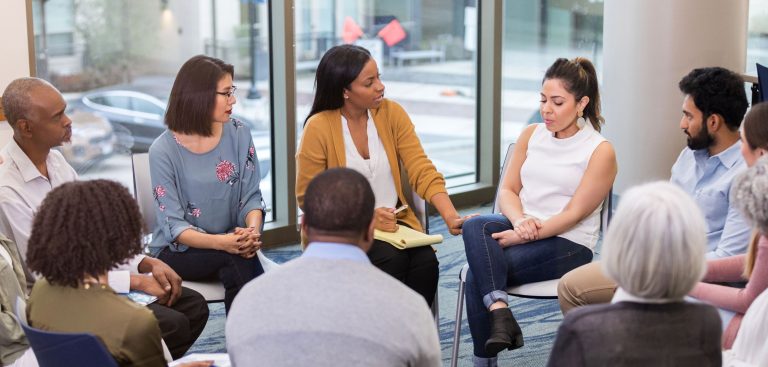
One solution, among many, is to reshape Australian mental health care and wellbeing to enable communities to shape and own their own care to prevent the escalation of mental health difficulties and create opportunities for healing and recovery to occur.
This is where Open Dialogue comes in. Clinicians have been developing the concept since the 1980s. It brings the person experiencing distress together with their family, friends and health professionals to explore perspectives on the crisis at hand. The aim of meetings is not to reach a rapid solution or to immediately change the direction or dynamic of the family. It is a dialogue to understand what this problem is all about, and what has happened in the life of the person
Through our work with our partners, we can understand the benefits for the person needing support who begins to feel listened to and taken seriously. We can see the healing happening. This is not to say that Open Dialogue is anti-medication or hospitalisation. It is however an accepted way of working with people with mental health difficulties.
The World Health Organisation considers Open Dialogue to be a world standard for community mental health services. It has produced guidelines for those who
wish to develop or transform their mental health system and services to align with international human rights standards including the UN Convention on the Rights of Persons with Disabilities.
The Open Dialogue Centre is establishing ways to implement Open Dialogue in Australia. While far from reporting on them, one thing is clear: the demand for the approach is strong
While better funding and access to services is crucial, so too is the need to transform how specialist care is delivered.

Moving beyond incremental change to system transformation in mental heath
In July ODC submitted a response to Productivity Commission’s Final Review of the National Mental Health and Suicide Prevention Agreement
As a purpose-led organisation dedicated to transforming mental healthcare through the implementation of the Open Dialogue Approach, we believe this review by the Productivity Commission offers a defining opportunity to reshape Australian mental health policy.
Below is an excerpt from our submission:
Unfortunately, the lack of specific objectives, goals and targets within the Agreements has prevented national mental health reform at the scale we need to see, and iterations of future Agreements will potentially continue to miss the point.
ODC agrees with Commissioner Selwyn Button’s statement in the accompanying press release where he stated: ‘The Agreement comprises a raft of outputs and initiatives that aren’t connected to each other or to an overarching strategy. In its current form, it cannot deliver the systemic, coordinated change it promises.’
Australia’s mental health system requires transformation, not reformation.

A new structure or architecture is needed for mental health and suicide prevention. While previous agreements have attempted to address systemic issues through incremental improvements and tweaks to resources, these approaches have essentially applied band aids to fundamental structural problems.
True transformation requires shifting from service-centered to community-centered approaches.
Services must interact with each other, breaking down the silos that currently fragment a person’s care experience, often re-traumatising them as they continually repeat their story.
To address this, we need to see youth services collaborating with mental health services, schools and First Nations led community organisations – so that no matter where the person is in their community – they are surrounded by a supportive network.
We urge the Productivity Commission to recommend that the next National Mental Health and Suicide Prevention Agreement explicitly prioritise system transformation over system expansion.
The evidence is clear: incremental change within unchanged systems produces incremental results. Australia’s mental health challenges demand transformative solutions if we are to shift the dial on mental health outcomes and see more people who can live their lives – able to reach their full potential.
The Mental Health Commission of NSW is leading the development of a new state-wide strategy to improve mental health and wellbeing. Their website says: This Strategy will guide and support whole-of-government efforts over the next ten years. It will focus not only on the mental health service system but also on the broader social and economic factors that influence mental health and wellbeing across the community.
The Commission wants to engage with and learn from anyone with interest in and insights about mental health and wellbeing in NSW.
There is a consultation process that is now open – until 5pm on August 29th.
This consultation is not intended to ask about a person’s own mental health and wellbeing. It is asking for opinions about the mental health service system and about community mental health and wellbeing.
You can participate by responding to a 5 minute online survey, or provide a written submission.
For more information about how you can participate visit this site.
ODC is working closely with our community partners in Shepparton to engage philanthropy in our next steps towards a whole of community approach to mental health and wellbeing in the region. On the 27th of August, our community partners and potential supporters came come together to explore the next steps in our collaboration to implement Open Dialogue.
The Goulburn Region faces urgent challenges in youth mental health, with high rates of school disengagement and youth unemployment. Local services recognised that to demand for support, they needed to coordinate and work together.
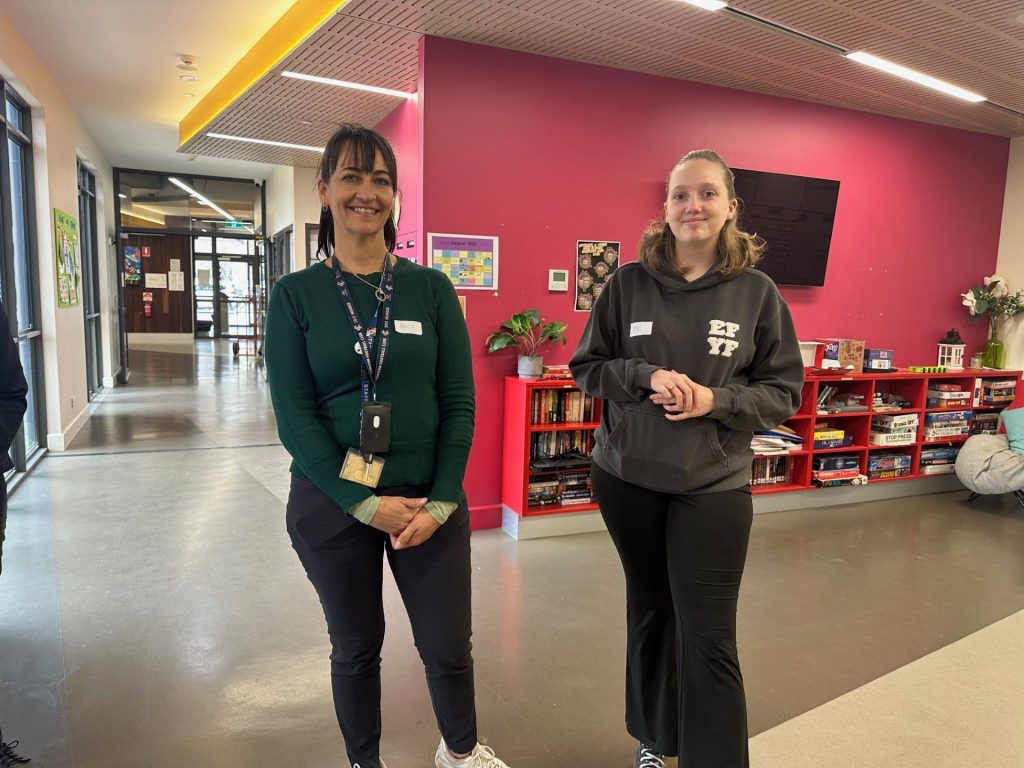
Anita McCurdy and Foyer resident Mel take visitors on a tour of the Shepparton Foyer
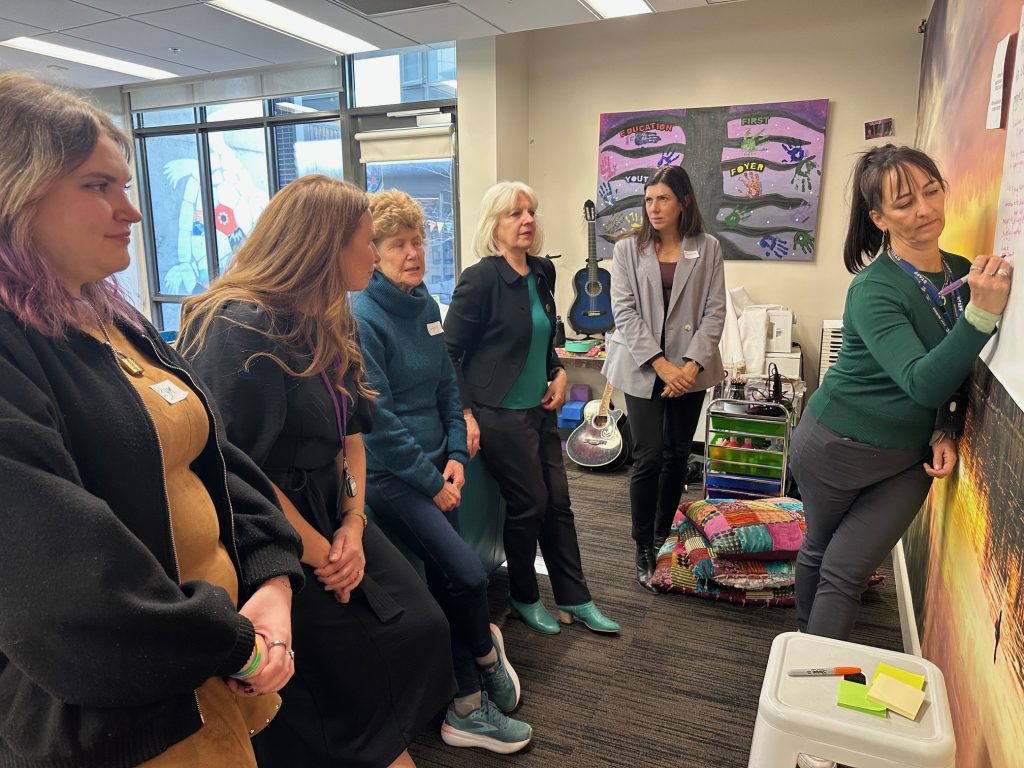
Community Partners, ODC and philanthropy coming together with young people
With support from the Open Dialogue Centre, they established Goulburn Region Open Dialogue Connect (GRODC) to create a whole-of-community response to youth mental health, built on the Open Dialogue Approach which fosters:
- Agency and voice, so young people can direct their wellbeing pathways.
- Young people’s connections and dialogue with family and social networks
- Compassion and continuity in care by bringing together supports from across the community.
Momentum is building, with over 200 local service providers participating in GRODC discovery days, workshops, and. Open Dialogue training. The Youth Foyer and CAMHS were first to engage in co-design workshops to align their practices and collaborate. Other community organisations are also interested in joining this transformation
In the next four years, GRODC aims to:
- Grow the network and facilitate collaboration, co-design, evaluation and learning, and training, with strong participation from and accountability to young people.
- Help service providers and community organisations to embed and sustain Open Dialogue practice.
If you would like to find out more about this extraordinary initiative or support our next steps, contact Keith Bryant on this email.
Additionally, the community web page is now live with our prospectus! You can download it here and meet our partners.
Open Dialogue Centre conference Brisbane 2026
Following our successful 2024 conference in Sydney, we are looking forward to hosting you in 2026.
Date: 23/24 July 2026
Theme: Services and communities – working together
Location: Rydges Southbank in Brisbane.
Save the date to secure your place!
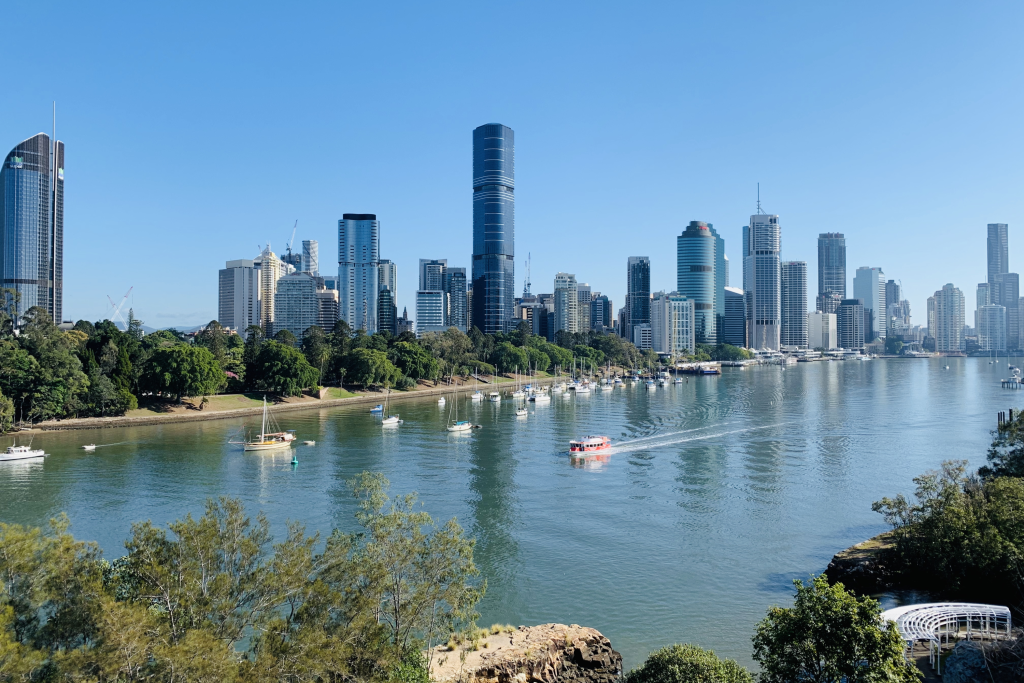
The Brisbane River
Open Dialogue Training
We are thrilled to welcome Tilly Read and Yasmin Ishaq (both from the UK) to co-deliver our upcoming training programs. Both are highly experienced trainers with extensive experience in Open Dialogue implementation within mental health services.
Brisbane EOI
Are you interested in completing a One-Year Foundation Course in Open Dialogue in Brisbane during 2026?
Online Four-Day Introduction
Our Online Four-Day Introduction to Open Dialogue commences in October
Melbourne OYFC
There are still a few spots left for our Melbourne One-Year Foundation Course starting 29 September. Click here to learn more about the course outline, who is involved and to register.
One-Day Online Introduction
Our One-Day online introduction to Open Dialogue will be on the 20th October 2025. This is an opportunity to develop your understanding of Open Dialogue, hear about the “how” in implementation, engage with others and ask any questions you may have about the approach.