

Perspectives
December 2025 Edition
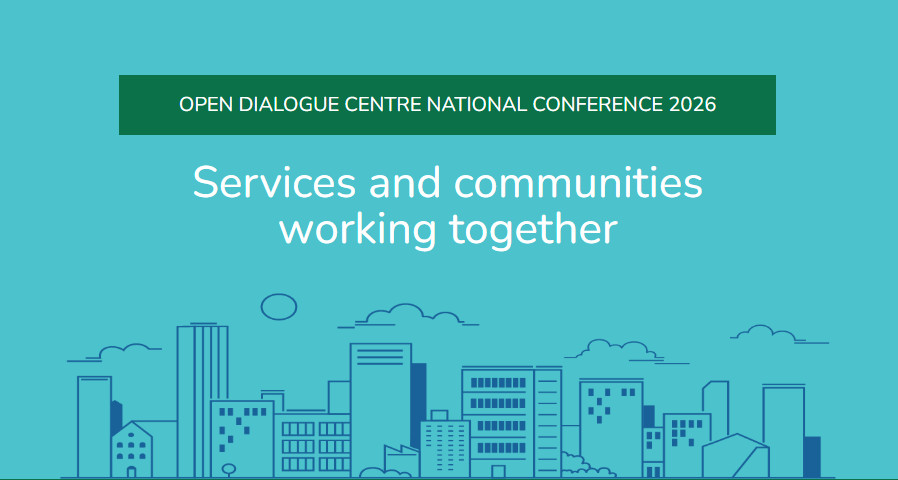
ODC national conference 2026
Registrations are open – reserve your spot!
Join us for the Open Dialogue Centre National conference
Services and Communities, working together
Date: Thursday 23rd – Friday 24th July 2026
Location: Brisbane, Rydges Southbank
Hear from leaders in Australia and globally who are practicing and implementing the Open Dialogue Approach, with insights into what it means for the workforce and how it works within services and for communities.
Discover the latest evidence and research. Explore how your service reform needs can be met. Open the door to a way of working that is more collaborative and integrated.
Hear from the team who led the ODDESSI trial – a large, randomised control trial into Open Dialogue in the UK. We will soon be announcing that Professor Steve Pilling will speak (who directed the research programme, funded by the NIHR).
Meet community services in Shepparton who are implementing a whole-of-community response to youth mental health and wellbeing. Anita McCurdy (Beery Street Youth Foyer), and Sally Thomas (Goulburn Valley Health) will share learnings about the role of lived experience, peer workers and social networks of support. They will also share how the voice of young people is driving the change needed in the region.
You’ll also learn about how Townsville is building the conditions they need to implement Open Dialogue so it meets their local needs.
Learn practical skills about how Open Dialogue can be adapted for different services and settings – through training and implementation support, with role play, real-life scenarios, intervision and communities of practice.
We look forward to seeing you in Brisbane, after a highly successful first conference!
Please take advantage of our early bird and group discount registrations:

Open Dialogue Training and workforce capability
The Open Dialogue Centre offers a suite of evidence-based programs designed as a journey to build workforce capability for mental health, allied health, youth, justice, primary care and wellbeing services – or for anyone who wants to introduce Open Dialogue to their community.
Our faculty has extensive experience in applying and evaluating the approach in different contexts.
We provide opportunities for continuous development with real-life scenarios, role play, Intervision and ongoing professional practice support – designed for workforce retention and better outcomes for people, families and community networks.
Open Dialogue training builds the network of Open Dialogue facilitators within a service and across the community. This ensures that network meetings can be facilitated by mental health and wellbeing professionals, youth and community leaders, people with lived experience and peer-support workers who are trained in the Approach. They can be held in an environment where the person feels safe and become a core part of the mental health response.
‘With Open Dialogue now popping up everywhere, I recognise the importance of a learning approach that has rigour and support from experienced facilitators as we implement it.’
Sally Thomas
Manager – Infant, Child & Youth Mental Health and wellbeing Services
Goulburn Valley Health
Our offer is getting sharper and our faculty has grown.
We are excited about 2026 and invite you to join one of our programs summarised below. Brisbane OYFC registrations now open.
Open Dialogue Centre Suite of Offerings
One Year Foundation Course
One-Day Exploration
Four-Day Skills Training
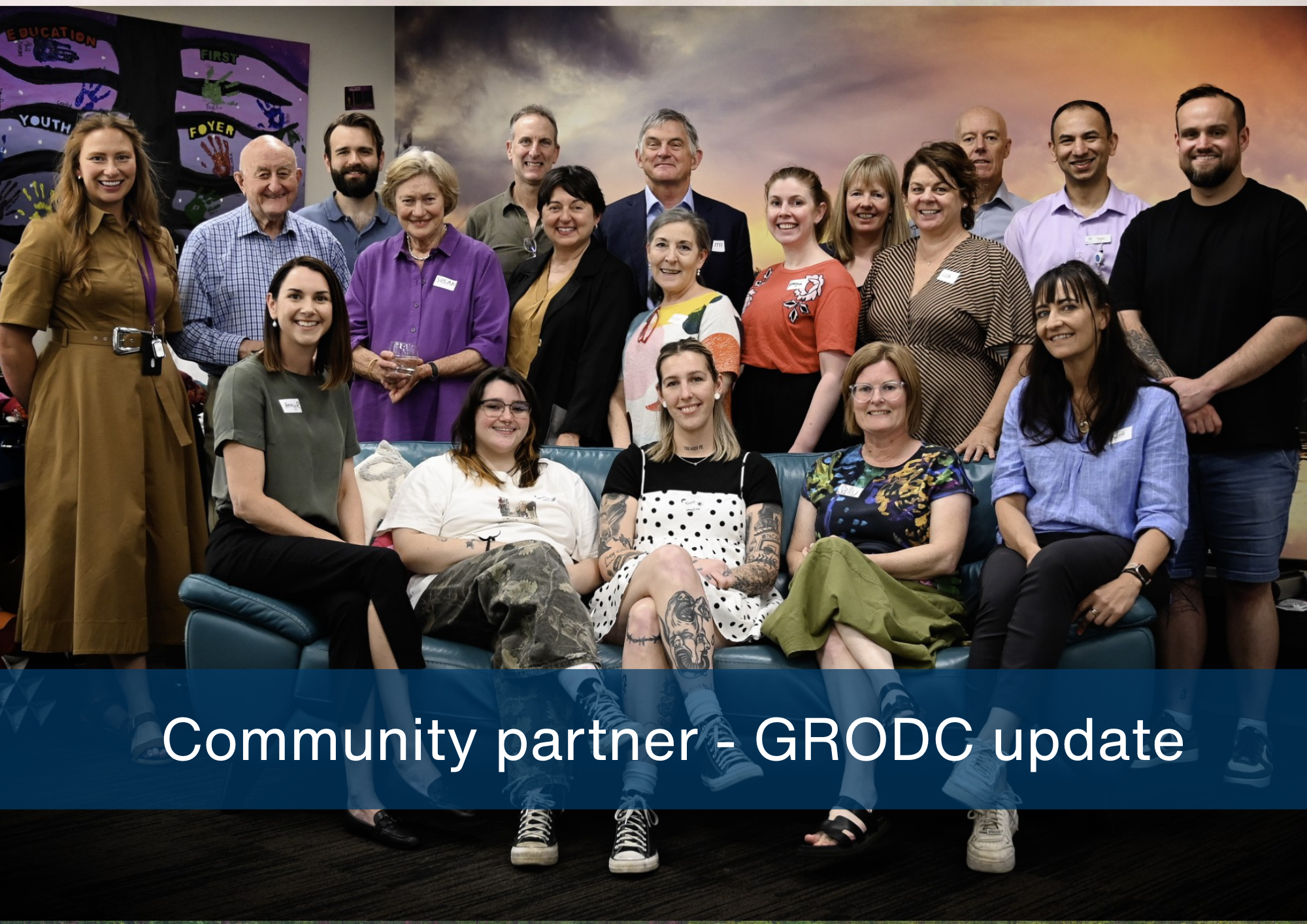
Community partners, services, young people, peer workers, supporters and funders stand in front of the mural at the BerryStreet Youth Foyer in Shepparton.
On December the 4th, ODC gathered with community partners and funders in Shepparton on Yorta Yorta land to share how we’re implementing Open Dialogue—enabling young people with a social network of support, where and when they need it.
We now have significant funding to continue this extraordinary work, creating real momentum for a community-based approach to youth mental health and wellbeing in the Goulburn Region of Victoria. Here’s what we know: Young people get it immediately. They tell us this approach is “so obviously needed”—bringing together their chosen family, friends, and local services in ways that actually make sense for their lives.
It’s harder to explain than to experience. Funders and leaders often struggle with the concept on paper, but when they see it in action, the response is universal: “This is just common sense in droves.” The outcomes speak for themselves. When young people have a real say in their care and get support through their own networks—without needing hospitalisation—everyone wins.
Open Dialogue offers a different approach
The Open Dialogue Approach ensures people are connected to a network of support in their community. It shifts the focus from crisis-driven care by enabling people to shape their recovery journey with support from chosen family, friends, and local services.

The implementation gap
We know what works—involving chosen families and friends, responding quickly, and creating space for dialogue produces better outcomes. Yet our systems still operate as if the individual in isolation is the primary focus of care. There is a gap in how we implement what works. The gap isn’t in the evidence; it’s in translating that evidence into everyday practice. We lack the infrastructure, training pathways, and system-level commitment to make relationship-based approaches like Open Dialogue the norm rather than the exception. But it is possible to address the gap.

In recent years, Open Dialogue has moved from a promising alternative to an evidence-based approach seeing active implementation across multiple continents.
What we’re exploring now isn’t whether Open Dialogue works—it’s how quickly we can reorganise our systems around what we’re learning to be effective, and how we can create the right conditions for community-based approaches with a clear pathway for implementing approaches like Open Dialogue.
England’s NHS is poised to commit at scale. The ODDESSI trial is testing an Open Dialogue-informed approach across six NHS sites. Early feasibility demonstrated Open Dialogue’s acceptability to both staff and service users, with participants reporting they feel able to rely on services and have genuine choice in their care.
Full trial results are expected soon.
Two forces driving change
The economic case is compelling Mental health conditions that escalate into crisis require far more expensive interventions. In Australia, the cost of mental ill-health and suicide is estimated at $220 billion annually (Productivity Commission, 2020). Peer-supported Open Dialogue teams in Kent demonstrated lower hospital bed usage than traditional crisis services. When combined with reduced medication costs, fewer emergency presentations, and higher rates of return to work, the economic case becomes increasingly persuasive.
Practitioners are seeking better models The workforce crisis in mental health isn’t only about numbers—it’s about meaning and sustainability. Practitioners who complete Open Dialogue training often describe it as transformational, not because it taught entirely new techniques, but because it created permission to practice dialogically and collaboratively, with time and space for what matters most.
We can close the implementation gap The evidence is clear. The economic case is strong. The workforce is ready. What’s needed now is the courage to shift our funding from models that fragment care to models that connect people—from crisis response to community support, from treating individuals in isolation to enabling networks of recovery.
The question isn’t whether we can afford to implement Open Dialogue. It’s whether we can afford to keep funding systems that aren’t working.

Keith Bryant, CEO

Thank you for your support and interest in 2025. We will be closed from 23rd to 5th of December.
We are all energised about 2026. Let’s continue to keep our vital conversations alive from Melbourne to Shepparton, Warrnambool and Frankston – from Sydney to Newcastle to Townsville – we hope you have a wonderful summer season and a great start to 2026.
Season’s greetings from the team at ODC.