
Perspectives
October 2025 Edition

The Open Dialogue Centre commissioned a research team led by A/Prof Bridget Hamilton from the Centre for Mental Health Nursing, the University of Melbourne, Victoria, Australia to conduct a Rapid Review of the international literature and existing evidence, to answer the question: How do systemic impacts of the Open Dialogue approach contribute to recommended transformation of mental health systems?
The Review revealed there is a compelling body of evidence indicating that Open Dialogue training and application builds the mental health and wellbeing workforce with skills and practices that are valued by people and families, and that Open Dialogue enables the kind of systemic shifts that the Victorian Royal Commission into mental health called for.
The full report is now available on ODC’s website and you can read it or download it here:
Open Dialogue Training commences in Shepparton on a high note
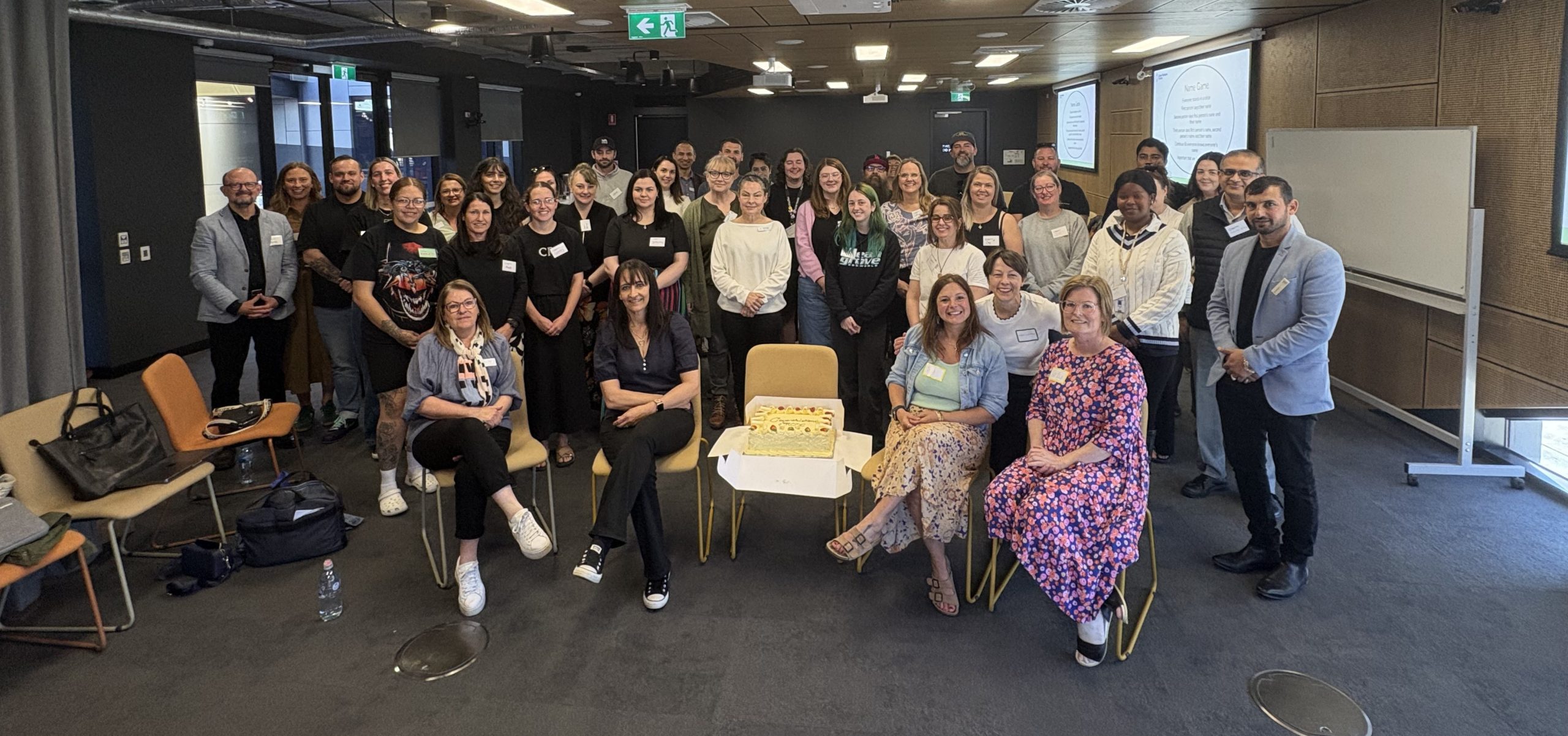
Shepparton Community Training Group
After the first of 12 days of Open Dialogue training last week in Shepparton to support a whole-of-community response to youth mental health and wellbeing in the region, ODC received this incredible message from Dr Tejas Golhar, Child and Adolescent psychiatrist at Goulburn Valley Health.
His energising and inspired words say it all:
“For the 13 years I’ve lived and worked in this region as a child and youth psychiatrist, I’ve dreamed of professionals across all levels reorganising ourselves into an accessible, well-connected relational safety-net for our region’s struggling youth.
Today, it began!
Thirty five professionals from across different services in our region – professionals from the wellbeing team at the only public high school in the region, from various NGOs supporting youth in challenging times, clinicians from headspace and from the publicly funded local area mental health and wellbeing service, and, quite excitingly, peers from lived and living experience workforce – all of us turned up to TOGETHER start a year-long training in Open Dialogue.
We all share a desire to help, but not infrequently feel the pressure to “do” or “say” something (at times prematurely), which can inadvertently undermine the young person’s agency (“you don’t get it!”).
This training promises to be the antidote: fostering a core competency in relating – i.e. compassionate empowering deep listening, and “being there” authentically – irrespective of our backgrounds. It’s about connecting all of us into a strong, responsive, interlacing fabric of support/safety-net with a golden thread while allowing the young person to own their trapeze act.
I’m hopeful this is the start of a positive culture change for youth mental health, and that we can engage more services and organizations as we progress in our endeavour.”
ODC’s community partners were thrilled to welcome Tilly Amber Read to Shepparton, for the first block of training. Tilly led the implementation of the ODDESSI trial in Devon in the UK and ODC has engaged her to co-facilitate the first block of training days with Mark Hopfenbeck for the Goulburn Region Open Dialogue Connect initiative in Shepparton.
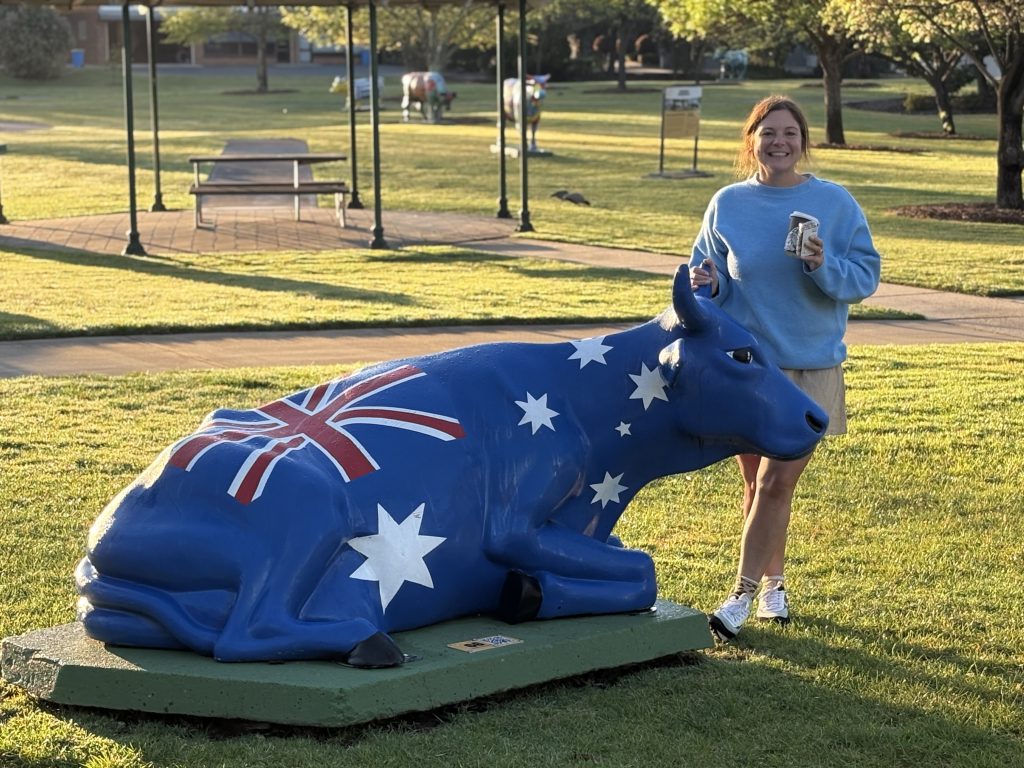
Tilly’s first time in Shepparton
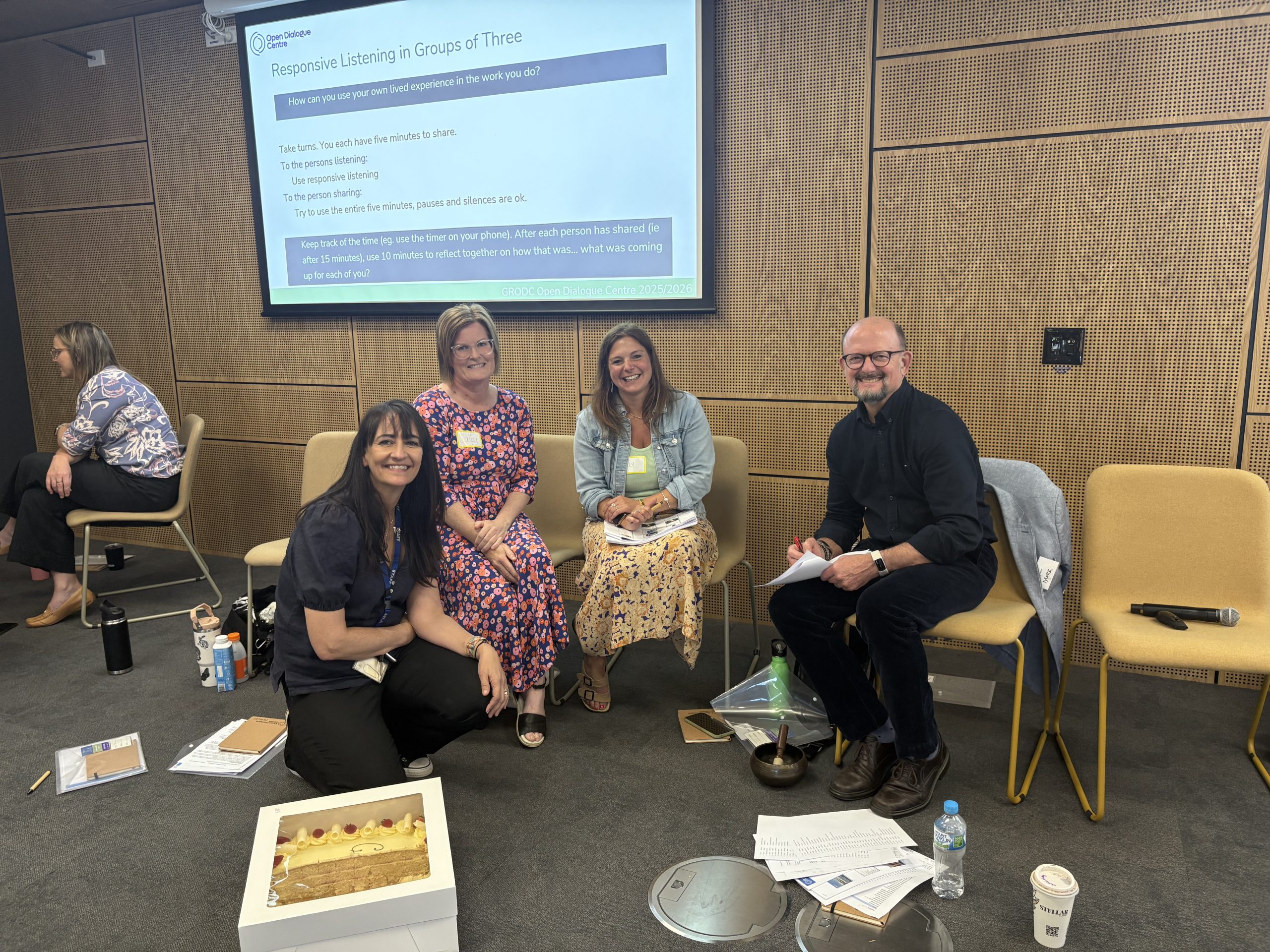
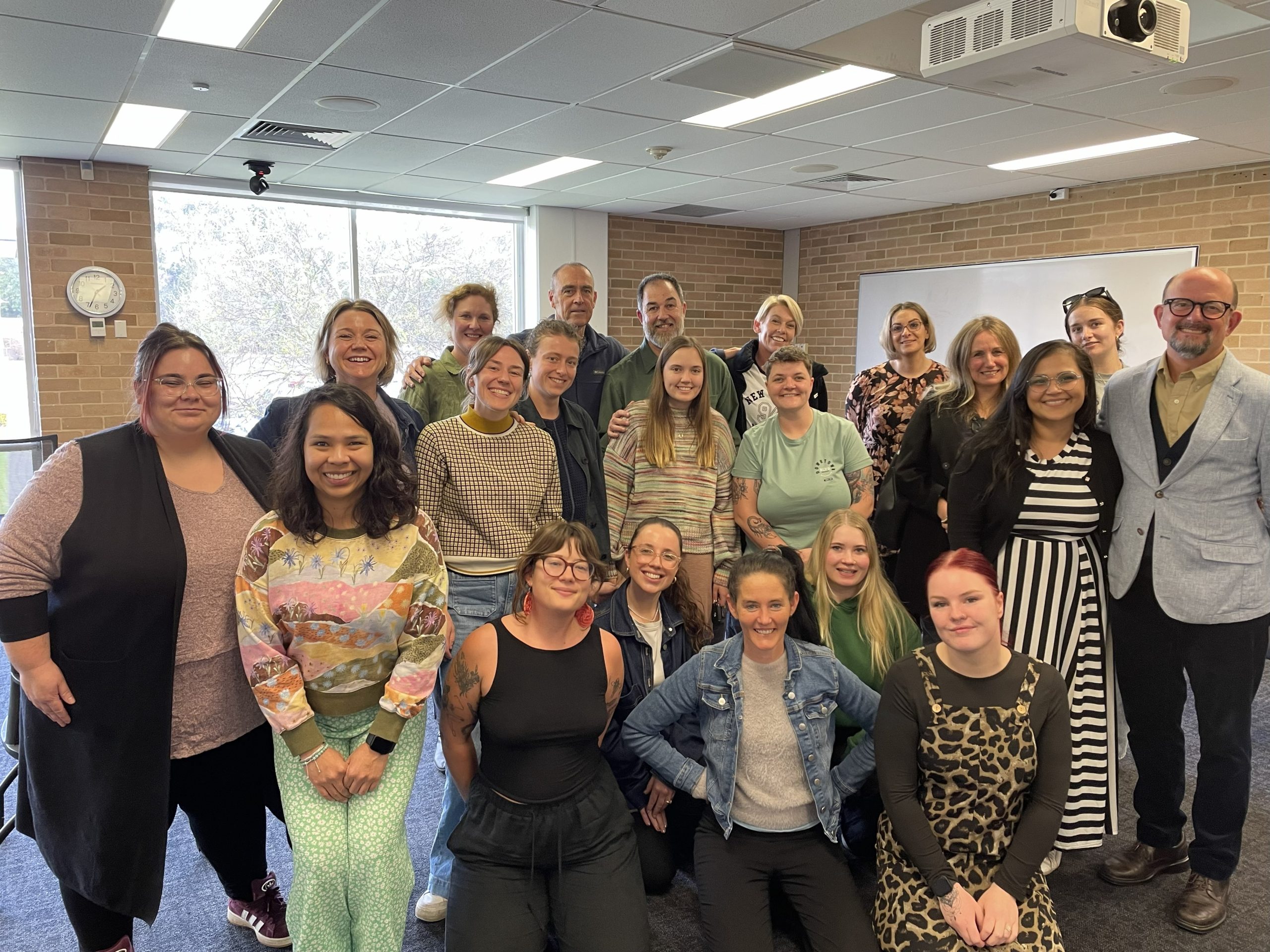
Anita McCurdy, Sally Thomas, Tilly Read and Mark Hopfenbeck catching up during training
Training has started
One-Day online introduction to Open Dialogue: a great group
On Monday 20th October we held our One-Day introduction to Open Dialogue with 26 participants from 4 states.
“It was a privilege to spend the day with Lived Experience practitioners, carers, managers, counsellors, and practice improvement leads exploring the theory and practice of Open Dialogue. The breadth and diversity of perspectives in the room reflected the growing recognition that meaningful reform in mental health care requires collaboration across roles and disciplines. Throughout the day, a strong consensus emerged around the potential of Open Dialogue to support systemic change — fostering more inclusive, relational, person-driven, and dialogical ways of working that can transform the experiences of consumers, carers, teams, and services.”
Mark Hopfenbeck, Head of Training, Open Dialogue Centre
Open Dialogue Training
After a fantastic One-Day online introduction to Open Dialogue, and a successful start to our four-day training, we have opened up registrations on our website for the next One-Day and Four-Day taking place in early 2026.
With Melbourne and Sydney in the midst of One-Year Foundation Courses, we have set up a page where you can register your interest in being part of a 2026 intake for this course in 2026 for either Brisbane, Sydney or Melbourne.
Don’t miss out! We are getting more popular as the word of mouth spreads.
One-Day online Introduction
Four-Day online Introduction
One-Year Foundation Course EOI
If you are from another state, please email us at training@opendialoguecentre.org.au as we are open to working with you, your service or team to enable training programs to be developed in different settings across Australia.
We look forward to sharing some insights, learnings and inspired feedback soon. The messages are flowing in from all of our programs and events with great support being shown for ODC’s tutors who have a great breadth of experience and knowledge between them.
Open Dialogue National Conference
Services and Communities working together
After a hugely successful conference in 2024, ODC is thrilled to announce we are planning an innovative program in 2026, with a rare opportunity to explore the current evidence-base and practice of Open Dialogue in Australia and globally.
If you are interested in connecting with mental health and wellbeing leaders who are changing how we approach, plan, design and deliver mental health care in community – this conference is for you!
Build your workforce capability through Open Dialogue and sustain your team
Change how practitioners and services collaborate with people, their families – and other services
Learn practical skills about how to adapt and implement Open Dialogue in different contexts
Explore deep listening and the notion of ‘nothing about me without me’ in practice
Discover how Open Dialogue is a recovery-oriented approach that honours hope, agency and voice
Engage with other organisations and communities who are working in a different way to elevate the agency and voice of young people
Be part of a growing social movement that is transforming mental health
CEO Blog
by Keith Bryant
Could We Be Building the Next Mental Health Revolution?
Attending my first TheMHS Conference in Brisbane this September was an eye-opener—and a wake-up call.
The conference theme ‘Envisioning 2050’ had me thinking not just about where AI might take us, but about a more fundamental question: after decades of mental health reform, why are we still failing people and their families so spectacularly?
Here’s a sobering statistic: Australia’s mental health spending has skyrocketed from $135 per capita in 1995 to $427 per capita today (adjusted for inflation). That’s more than triple the investment and yet our nation’s mental health is no better in 30 years.
During the conference I was reminded about a small Italian city that dared to imagine something completely different.

Trieste Inner harbour | 14 September 1971
Trieste: When a whole community said “enough”
In 1971 in Trieste, a coastal city in northeast Italy with 200,000 residents—roughly the size of Hobart – Franco Basaglia became the director of the provincial psychiatric hospital and started a process of transformation with a group of young physicians, psychologists, volunteers and students. But what happened next wasn’t just another policy reform or hospital closure. It became a social revolution.
Basaglia had been revolted by what he observed as the conventional regime of institutional ‘care’ with locked doors when he first worked in Gorizia in the early 1960s. But by the time he reached Trieste, he understood something profound: you can’t fix a broken system by simply moving the broken pieces around.
Instead of just closing the asylum and opening new facilities, Basaglia created a community movement. The Trieste model put the person—not their diagnosis—at the centre of the health care system. Art, food and social activities became ways for the whole community to be involved in a person’s mental wellness.
The results speak for themselves: Trieste today has consistently lower suicide rates, less homelessness, fewer people with mental illness in prisons, and dramatically reduced use of compulsory treatment orders. Basaglia’s reforms ultimately led to a 1978 law that abolished all of Italy’s mental asylums, and the Trieste model has been emulated in several Italian regions and more than 40 countries. It is recognized by the World Health Organization as one of the most progressive community-based mental health care systems in the world.
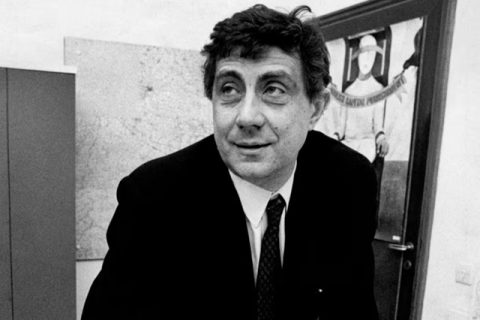
Franco Basaglia
Basaglia died tragically young at 56 in 1980, but his legacy lives on. The implementation of the psychiatric reform law was completed in 1998, marking the end of Italy’s mental asylums.
Why Trieste succeeded
In the 1960s and 1970s, people who were considered mentally ill were kept in enormous asylums, often for the rest of their lives. And while in our current climate, things have evolved, simply moving services into the community isn’t enough if you don’t change how the community thinks about mental health.
Many countries, including Australia, still approach mental health with an institutional mindset. We’re obsessed with building “world-class facilities” and writing endless policy documents about community-based care. But sadly, many of the dehumanising things we found so horrible about asylums still exist in our current mental health services, just in different buildings.
Trieste succeeded because it wasn’t just about redesigning services. It was about fundamentally shifting how an entire community understood and responded to psychological distress.
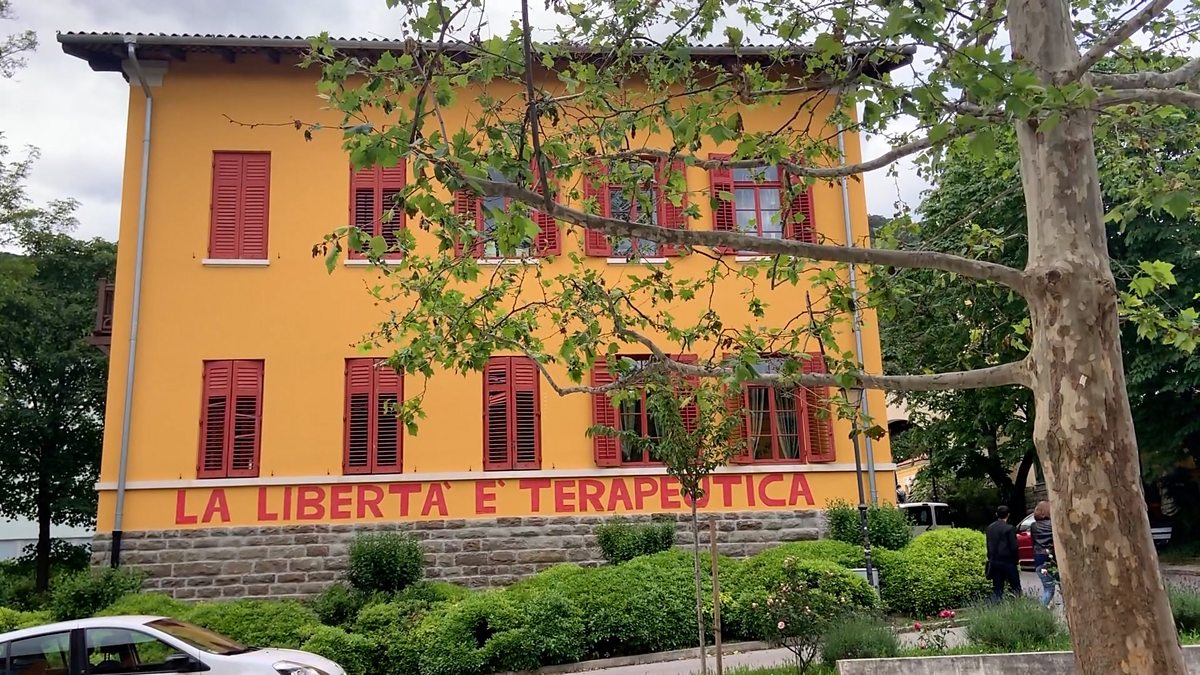
“La Libertà è Terapeutica” – Freedom is Therapeutic
The Goulburn Region in Victoria: Australia’s next Trieste?
My own presentation at the conference described the Open Dialogue Approach and its potential to radically transform mental health service design. This is emerging now as a real possibility in the Goulburn Region of Victoria, where our community partners see the same possibility that Basaglia must have felt 50 years ago.
Open Dialogue isn’t just another treatment model—it’s a social movement that recognises mental health crises as fundamentally relational. Like Basaglia’s revolution, it requires everyone to participate: families, networks, services, entire communities can lean in to create a safe space for dialogue and connection.
Could Shepparton become Australia’s Trieste? Could we create something so transformative that in 2050, visitors will travel from around the world to understand what we built here?
I am sure Basaglia would have loved Open Dialogue. He would have recognised it immediately as the same type of revolutionary social movement he championed in Italy. Both approaches understand that real mental health transformation isn’t about better hospitals or smarter policies—it’s about services learning to work together to build relationships and community capability.
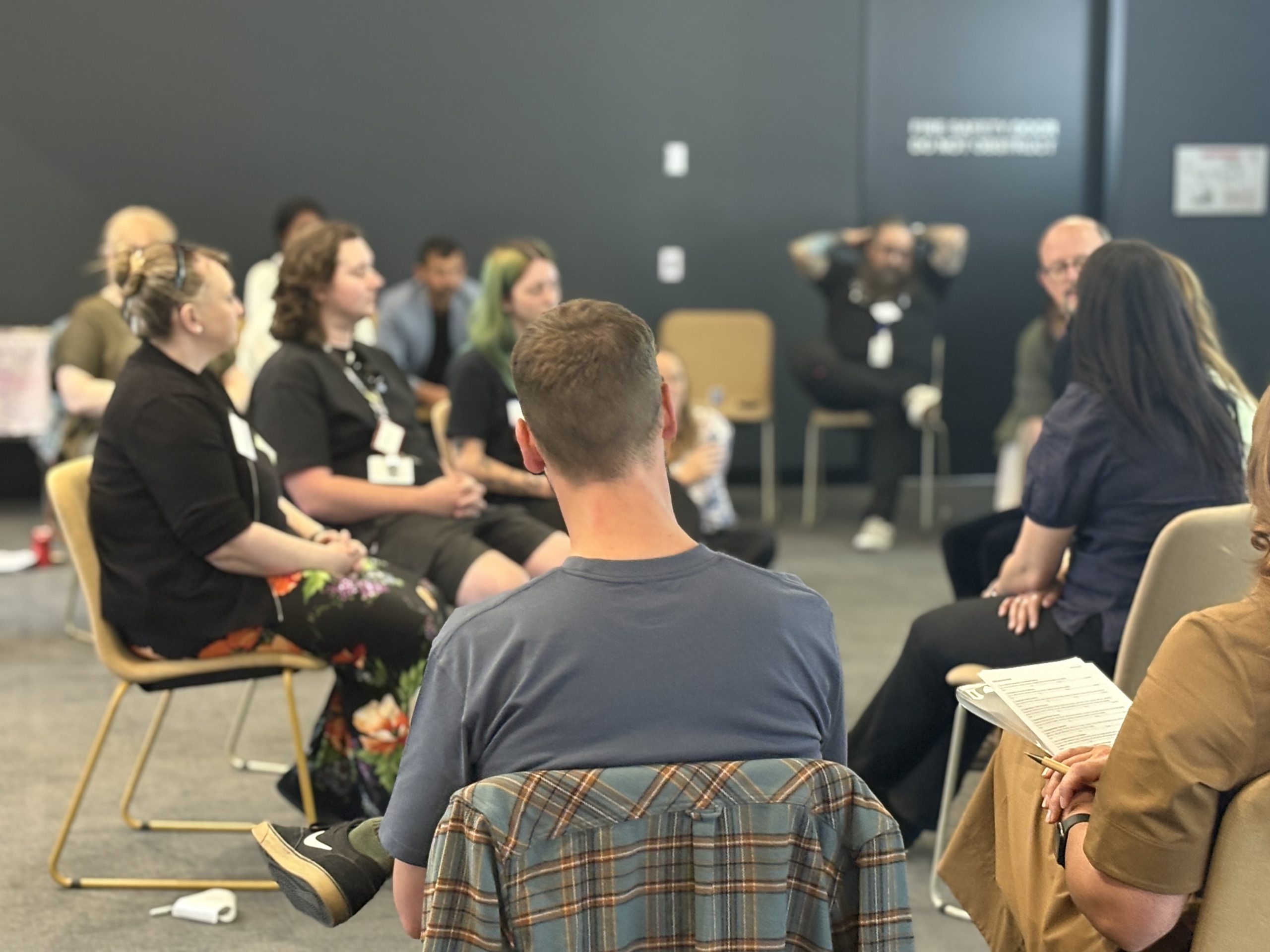
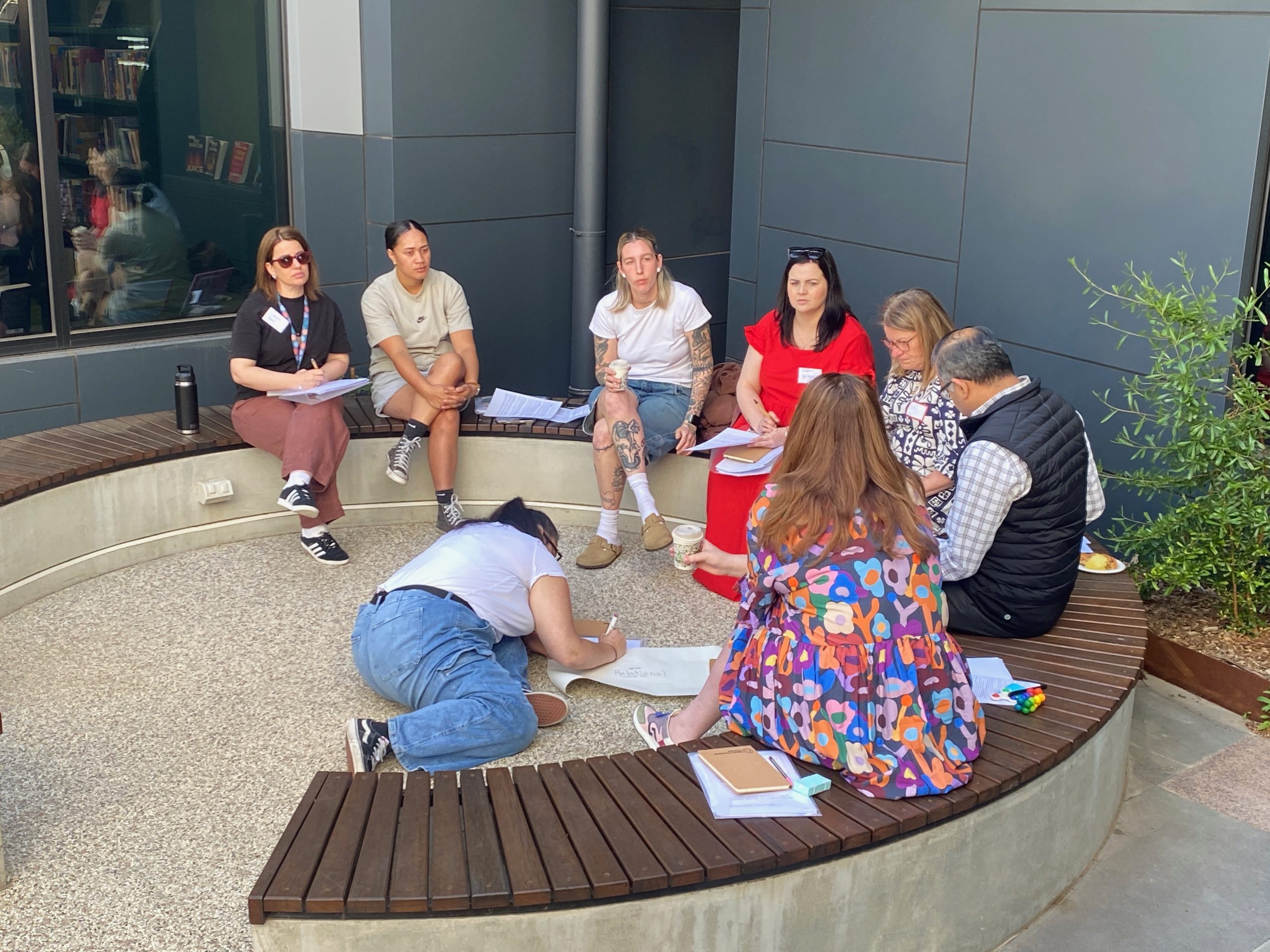
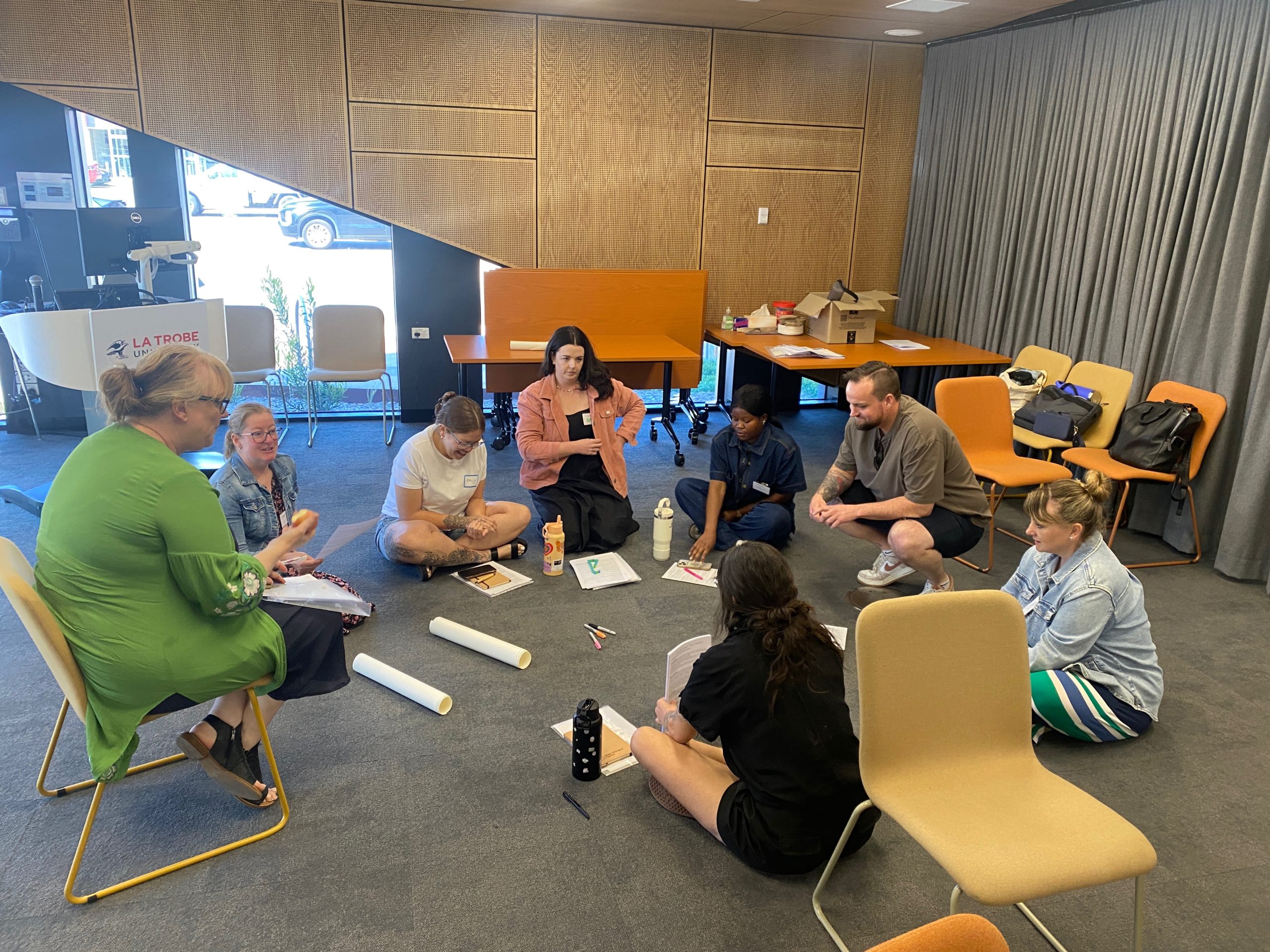
Shepparton community getting started on Australia Trieste
Alfred Health: Open Dialogue Symposium a great success
Congratulations are in order to Alfred Health team members Paul Denborough, Glenda Pedwell, Rachel Barbara-May and Deb Warner for facilitating a fantastic one-day symposium titled ‘Where every Voice Shapes Recovery’ hosted at the Victoria Pride Centre in Melbourne in early October.
100 clinicians, therapists, psychiatrists, researchers and peer support workers with lived experience gathered to discuss the future of Open Dialogue in our mental health landscape.
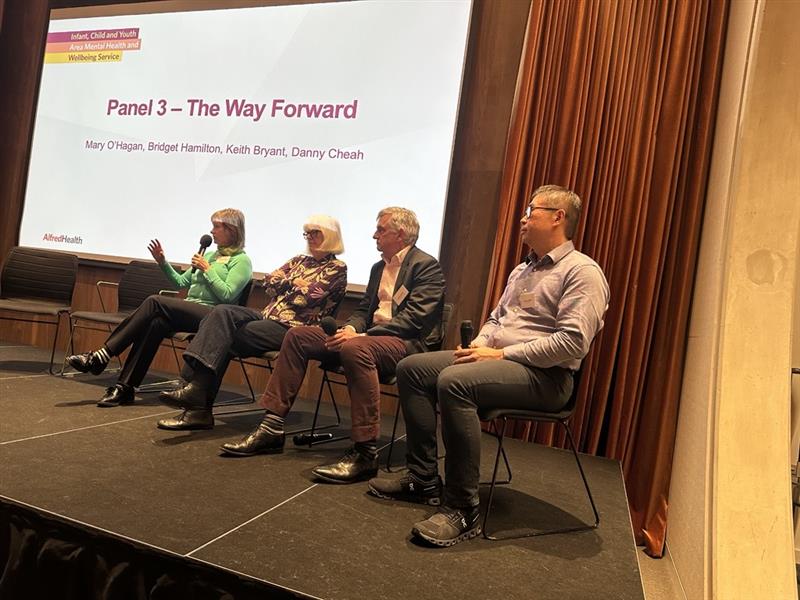
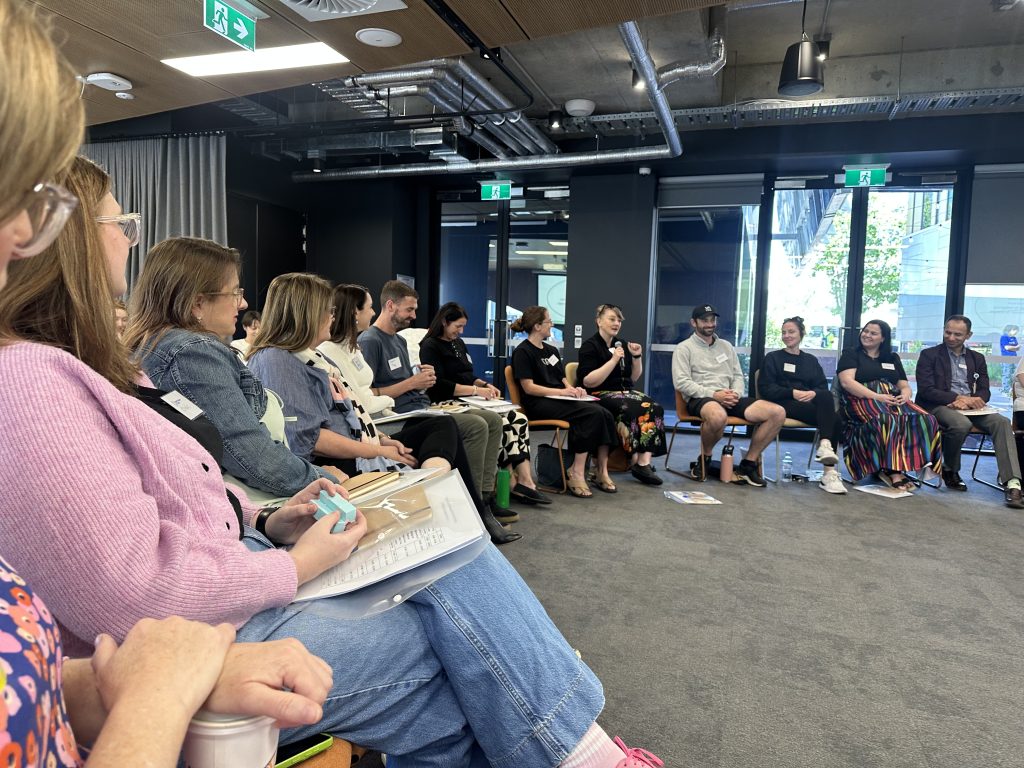
Open Dialogue panel discussion with Bridget Hamilton, Mary O’Hagan, Keith Bryant, and Danny Cheah.
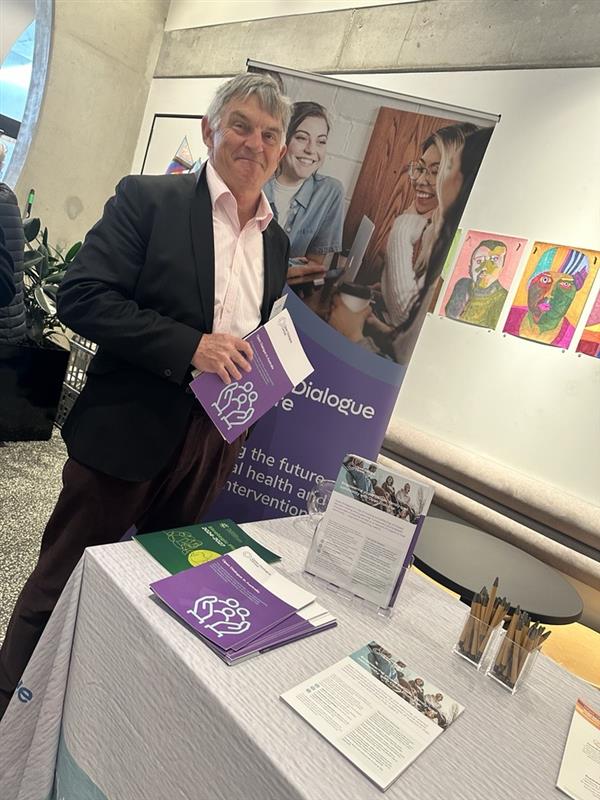
Keith Bryant manning the ODC stall at the Alfred Symposium
Alfred Health Board Chair Chair Martin Foley conducted the opening address and spoke about the University of Melbourne’s Rapid Review of Open Dialogue which is now available on ODC’s website.
For your interest, Keynote speakers included:
Sandy Steingard MD: Sandra is Clinical Associate Professor of Psychiatry at the University of Vermont Larner College of Medicine. Sandra has worked in a variety of settings in the public sector of Vermont’s mental health care system. A student of Open Dialogue, she has helped to develop a Vermont-based adaptation of this work, Collaborative Network Approach.
Mia Kurtti: Mia is an MSc psychiatric nurse and a trainer and supervisor in family and couple psychotherapy and the Open Dialogue approach. She has worked for more than 20 years in public mental health services in Western Lapland, Finland, using therapeutic and dialogic approaches in her work with individuals and their families and networks.
ODC’s CEO Keith Bryant was also part of a panel discussion around the next steps for Open Dialogue in Australia along with Mary O’Hagan, Bridget Hamilton, Danny Cheah.
The symposium was a great way for participants to discover how the movement and evidence base for Open Dialogue is growing. There were lots of practical examples and different ways for services to connect about the opportunities in Australia to train up and share learnings and experiences – from facilitating network meetings to working in a strengths-based and dialogical way.